In-person: Unlocking the Potential of Smaller and Marginal Developments on the NCS
The sustainable recovery technical committee welcomes you to a 1-day seminar on the theme "Unlocking the Potential of Smaller and Marginal Developments on the NCS." This high-profile FORCE event will bring together subsurface professionals, front-end and project engineers, economists, managers, and senior leadership from operators, suppliers, and regulatory bodies to explore how the industry can collectively unlock this potential. Don't miss out on this great event.
Date: 03. February
Time: 09:00
Register by: Waiting List
Location: Valhall - Prof Olav Hanssens vei 10, Havtil Entrance Stavanger
Note: All attendees must bring a picture ID to attend the seminar. We only accept passport, Norwegian driving licence and national ID card (within Schengen). If you do not bring valid ID, you may be denied entry.
Program (subject to change)
08:30 Registration and refreshements
09:00 Welcome and introduction
FORCE TC Sustainable Recovery
Frame The Potential
09:10 The authorities perspectives on developing marginal discoveries
Kalmar Ildstad, Norwegian Offshore Directorate
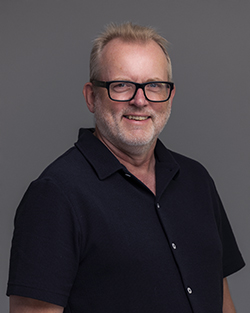
Director of regulations, licence and area management. He was hired in 1989 and has held multiple management positions since 2006, including within development and operations, data management and competence development. He has served as director of the licence management department since 2021. Kalmar holds a Master of Science in Engineering from the physics department at the Norwegian Institute of Technology (now part of NTNU).
09:25 “Marginal subsea tie-back field development project” – Maximizing value in untapped reserves
Anne-Lise Søyland & Magnus Svensson, Offshore Norge

Lawyer and Manager for regulations and operational management in Offshore Norge working with operators and suppliers on the NCS advising on HSE regulations, decommissioning, subsea assets and operations. Responsible for the Offshore Norge Marginal subsea tie-back field development project.
Thorough experience with over 15 years in the energy industry with legal counselling, commercial negotiations, regulatory development, leading contract negotiations, strategy work, project management, digitalisation, change management, M&A, leading gas sales tenders, analysis and studies, and infrastructure projects.
Master’s degree in Law and bachelor's degree in Business Administration.
09:40 Keynote speaker
Michael Zechner, Harbour Energy
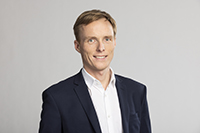
Michael Zechner is Managing Director of Harbour Energy in Norway. Originally a geoscientist, he has worked in the E&P industry in different roles in Germany, Argentina and Norway. Since 2022 he has been in Norway as managing director, first for the legacy company and then continuing in the same role for Harbour Energy.
09:55 Unlocking Marginal fields on NCS
Sigurd Omland, Petoro
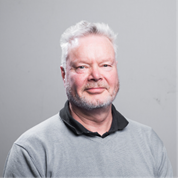
Sigurd Omland has a master degree in Economy and Engineer and working in Petoro (24 years) currently as Asset Manager. Working I all phases, early phase, project development, operation and decom. Previous experience from Kværner and ABB, mainly project management and project leader for various development projects (SURF, topside, onshore, modifications).
Abstract: The discovery on NCS is getting smaller, HOST are getting older with lower production which give higher Opex share to Tie-in fields, in total there are more marginal fields that need cooperation, re-use, standardization and shorter time from discovery to first oil, to be able to be developed.
10:10 Panel discussion
Anne Lise Søyland, Offshore Norge
Jon Friis Stomsvik, Equinor
Kalmar Ilstad, Norwegian Offshore Directorate
Michael Zechner, Harbour Energy
10:40 Break
Enablers & Blockers
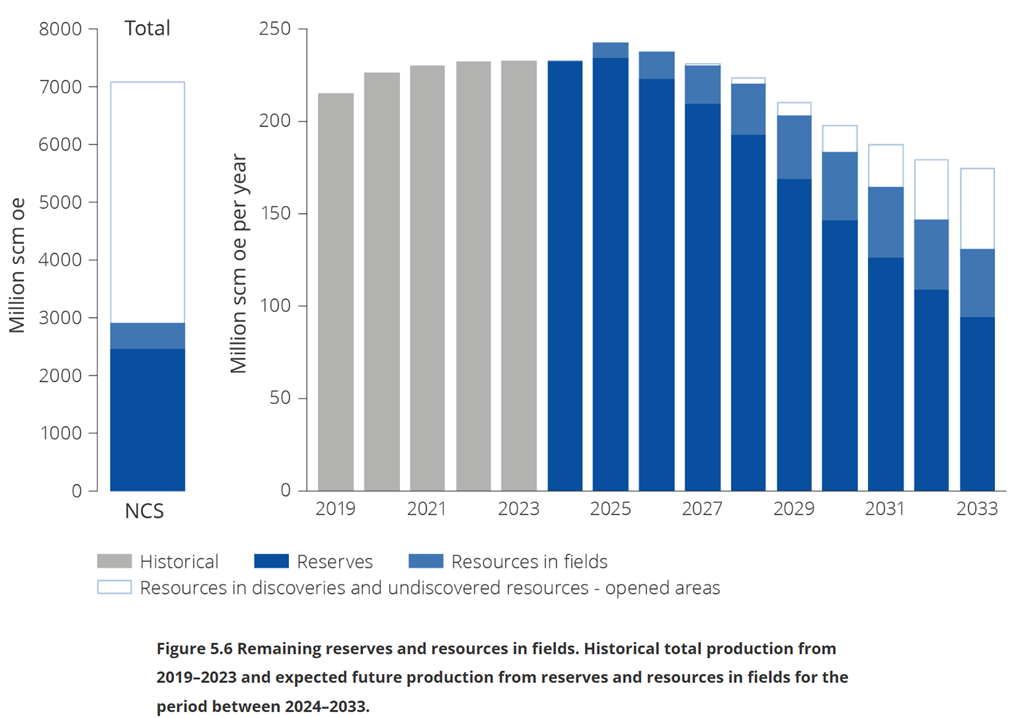
10:55 Resource Report 2024
Terje Sørenes, Norwegian Offshore Directorate
11:15 Know what you are asking for; the implications of not communicating the lowest level of functional requirements across disciplines in tie-back projects
Øyvind Koldal, Orlen
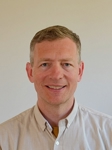
Bio: Øyvind has 20+ years of experience within the Oil and Gas industry since starting as Drilling Service Engineer in Schlumberger in 2002. Currently employed in Orlen Upstream Norway as Principal Facility & Project Engineer. The work scope covers from early phase concept evaluations and up to detailed root-cause-analysis as required. He is a jack-of-all-trades having a strong multi-discipline engineering background and enjoy working with overall system functionality and seeking the best concepts within the assigned frames without compromising on the safety aspects. His main domain is within subsea engineering, but skills overlap both upstream wells to downstream topsides.
Abstract: Early phase engineering is about building value, while project execution is more about prevent value destruction. Trying to unlock "stranded resources" requires that the industry does something different, particularly in the project's early phases. By definition doing the same over and over again will result in the same outcome, this consequently prevent projects being executed as there is no value improvement. One factor preventing conceptual changes is cost driving functional and/or technical requirements treated as the "law", and there is no willingness to challenge the foundation (which may not be present) supporting these. The presentation will present some generic examples, from the perspective of the SURF discipline, related to the impact when engineers select not to challenge cost driving functional requirements, "aka. stay on the road of comfort and least resistance", neither within own discipline or at inter-discipline level.
11:35 Barbone technologies needed to realize marginal NCS subsea tiebacks
Per Gerhard Grini, Equinor
Bio: Per Gerhard Grini is Senior Manager for a Strategic Technology Project on Subsea Tiebacks in Equinor’s Technology Digital & Innovation (TDI) organization, and is located in Trondheim, Norway. The project will provide a technology base to realize the gradual increase towards Equinor production of 400 kbbl/d from ILX/ marginal discoveries in 2035. Per Gerhard holds a master’s in mechanical engineering and a doctorate in Thermodynamics from the University of Trondheim, Norway (NTNU). He has more than 35 years of experience in our industry, and held various leadership positions within Statoil/Equinor, as well as in national collaboration initiatives such as OG21 and the Research Council of Norway.
Abstract: The many prospects and discoveries of small resources at NCS need significant cost reductions to be developed as tieback reserves to existing processing hosts. Technologies will play a key role in reaching this cost reduction. But a totally new mindset is needed as we must ask ourselves; What can be radically simplified - and what can we do without? Presentation will focus on opportunities under maturation in Equinor.
11:55 Lunch
Case Examples and Lessons Learned
12:40: Tommeliten A: From Discovery to Development 1977-2023
Daniel Forder, ConocoPhillips
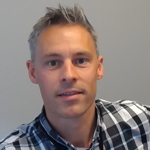
Bio: Daniel has 20 years of industry experience, primarily in Field Development. A geoscientist by background, he graduated from Imperial College London in 2005 with an MSc in Petroleum Geoscience. His career has been spent working the North Sea in both the UK and Norwegian sectors, with the last 15 years with ConocoPhillips. In recent years he has been involved with several of the Greater Ekofisk Area development projects, including the Tommeliten A.
Abstract: The PL044 Tommeliten Alpha gas condensate discovery, made in 1977, faced decades of development challenges due to subsurface uncertainty and limited tie-in options. Building on earlier initiatives to realize its potential, the field was successfully brought on stream in 2023. This talk will trace the asset’s journey from discovery to production, highlighting the key hurdles, decision points, and strategies that ultimately enabled its development.
13:00 Reducing Uncertainty in Hod Field Redevelopment: Leveraging Seismic Data and Proven Concepts
Wayne Oxborough, AkerBP
Bio: Advanced Geophysicist at Aker BP specializes in seismic interpretation and uncertainty reduction for field development. He has contributed to Valhall and Hod projects via seismic interpretation, integrating geologic understanding to ensure robust, cost-effective well and projects concepts that optimize reservoir understanding and minimize risk.
Abstract: Hod was redeveloped by Aker BP from 2017 to first oil in 2022, boosting Valhall output. Rigorous subsurface evaluation using new seismic and an appraisal well reduced uncertainty and enabled an optimized concept, supported by a proven VFW NUI design to minimize cost and risk. Lessons from Valhall and new technologies ensured a robust, cost-effective redevelopment that maximized value.
13:20 Unlocking Marginal Fields: What We’ve Learned from Hasselmus, Bestla and Galtvort
Håvard Morset, Okea
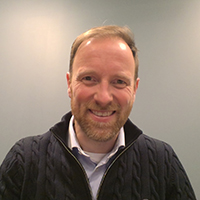
Abstract: This presentation shares practical lessons from OKEA’s recent early-phase projects, including Hasselmus, Bestla and Galtvort. These fields were previously considered uneconomic, but through simple concepts, fast iterations and supplier involvement, they became viable developments. The talk highlights what actually worked in practice—how we structured concept development, how we challenged cost drivers, and how cross-discipline collaboration accelerated progress. The aim is to offer concrete takeaways that others can apply in their own marginal field work.
Bio: After years working in technically complex field development projects, Håvard became increasingly interested in how teams collaborate and which methods and tools support effective concept maturation. He is a project manager with a reservoir engineering background. Over the last five years, he has championed the introduction of hybrid project management at OKEA, combining agile ways of working with the stage-gate governance model
13:40 Kjøttkake fast-track – From exploration drilling to first production in 3 years
Regina Hermelin, DNO
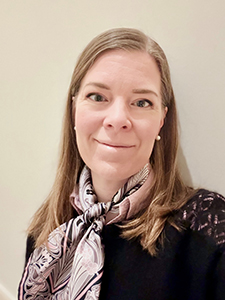
Regina Hermelin is the Head of Projects at DNO and served as the Project Manager for Kjøttkake until the end of 2025. She holds an MSc in Civil Engineering and has 20 years of experience in the oil and gas industry, spanning a range of technical and leadership roles on both the supplier and operator sides.
Abstract: In this talk, I will share key enablers and lessons learned from the first year of developing Kjøttkake and explore how these helped us shape a development roadmap that will bring Kjøttkake into production approximately three years after its initial discovery
What's next? Shaping the future
14:15 Yggdrasil – marginal fields are better together
Ørjan Tveteraas, AkerBP
Bio: Ørjan Tveteraas is a Subsurface Manager and Reservoir Engineer with a strong background in reservoir development and reservoir management. Ørjan's experience includes leading roles in the field development of Skarv Satellites and from his current role as Subsurface Manager of Hugin Fulla Subsea in Yggdrasil.
Abstract: The Yggdrasil project integrates nine fields to reduce risk and capture synergies across the value chain. An uncertainty-driven reservoir modelling workflow and robust technical concepts optimize limited data and avoid costly appraisal drilling, while leveraging infrastructure enables tie-ins like Øst Frigg. Advanced technologies—quad-lateral wells, smart completions, and inflow control—unlock stranded resources and boost production.
14:35 Gjøa Subsea Project
Robert Watts, Vår Energi
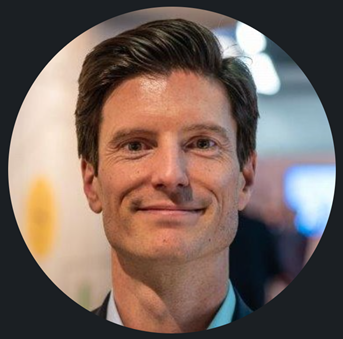
Bio – Robert Watts, current role as Subsurface Manager for Gjøa Subsea Projects in Vår Energi
Over 20 years experience in the E&P energy industry (Vår Energi, ExxonMobil International, Qatar Petroleum), with numerous roles since 2002 across the Upstream value chain (assignments in UK, Norway, USA, Australia, ME & Africa) covering Reservoir Engineering, Drilling Wells, Production Operations, Exploration, Field Development, Global Projects & Project Execution, Business Planning, Area Development Strategy, People & Competency Development.
Abstract - Gjøa Subsea Projects – from discovery to delivery – faster, smarter!
With a focus on innovative technologies and agile workflows across both exploration and development to boost efficiency and unlock value, we are demonstrating risk tolerance in marginal developments is much about nurturing a rare balance of speed, quality, proactive collaboration and entrepreneurial tenacity.
14:55 Move fast after discovery – Transforming EXecution (TEX)
Raghavendra Kulkarni, Equinor
Abstract: Presentation of the TEX initiative which has objective to reduce cost of marginal field development and reduce time between discovery and first production.
15:15 Maria Phase 2: Lessons in Marginal Field Development
Vedad Hadziavdic, Harbour Energy
Bio: Vedad Hadziavdic is Senior Project Manager in Harbour Energy. He has worked on Maria Phase 2 – further development of the Maria field with new drainage strategy subsea installations and wells, for the past five years. He joined Harbour Energy in 2014 and has worked as geophysicist and subsurface manager prior taking the current position. He has PhD in statistical physics.
Abstract: Successfully achieving First Oil on time, budget and without any significant incidents, the Maria Phase 2 project offers valuable insights into marginal field development. The project's small reserve size (27Mboe) created challenges common to the industry. We will discuss the key decisions and strategies—from subsurface and subsea solutions to contracting and commercial approaches—that were essential for reaching a Final Investment Decision and ensuring the project’s successful execution.
15:35 Closing remarks
FORCE TC Sustainable Recovery
15:45 End of day
FORCE seminars have previously been fully booked with waiting lists so you are encouraged to sign up as soon as you know you will attend.
Participation fees Stavanger:
FORCE members: Free
Non-members: NOK 1500,-
University/Students: Free
Important information:
You can register as a FORCE member and pay "FORCE member" price if you are an employee of a member company.
All FORCE member companies are listed here.
Payment is made online by credit card or VIPPS. Please note that no refunds will be given after you have signed up.
If you for any reason cannot attend the workshop, you are welcome to send a representative, just inform the FORCE Secretariat as soon as there are changes.
If you need to cancel your registration, please use the confirmation e-mail you received when you signed up.
If the seminar/webinar is cancelled, your payment will be refunded.
For other questions, please contact the FORCE Secretariat
Norwegian Offshore Directorate org.no: 870917732
Updated: 11/20/2025