

Backdrop
The Norwegian continental shelf is an important petroleum province with considerable resource potential and can play an important role in long-term value creation. Improved recovery from fields, shorter lead times from discovery to production, more exploration in underexplored areas and new technology can curb the decline in production. This requires diversity on the NCS and companies that are willing and able.
In this chapter:
- Significant resources remain
- High activity – great values
- Exploration is crucial
- Production up to 2035
- Improved recovery extends lifetime
- Infrastructure, discoveries and fields – interdependence
- Strengthening diversity with companies that are willing and able
- Three scenarios
- Competence and technology development
Significant resources remain
The remaining resources on the NCS are considerable. The total expected resource volumes (including those sold and delivered) are estimated at around 16 billion standard cubic metres of oil equivalents (scm oe), of which approximately 7 billion scm oe are expected remaining resources.
Of the expected remaining resources, about half are reserves and resources in discoveries and fields, while the other half are undiscovered resources. The undiscovered resources are associated with the greatest uncertainty but also represent the greatest long-term resource potential, as illustrated in Figure 1.1.
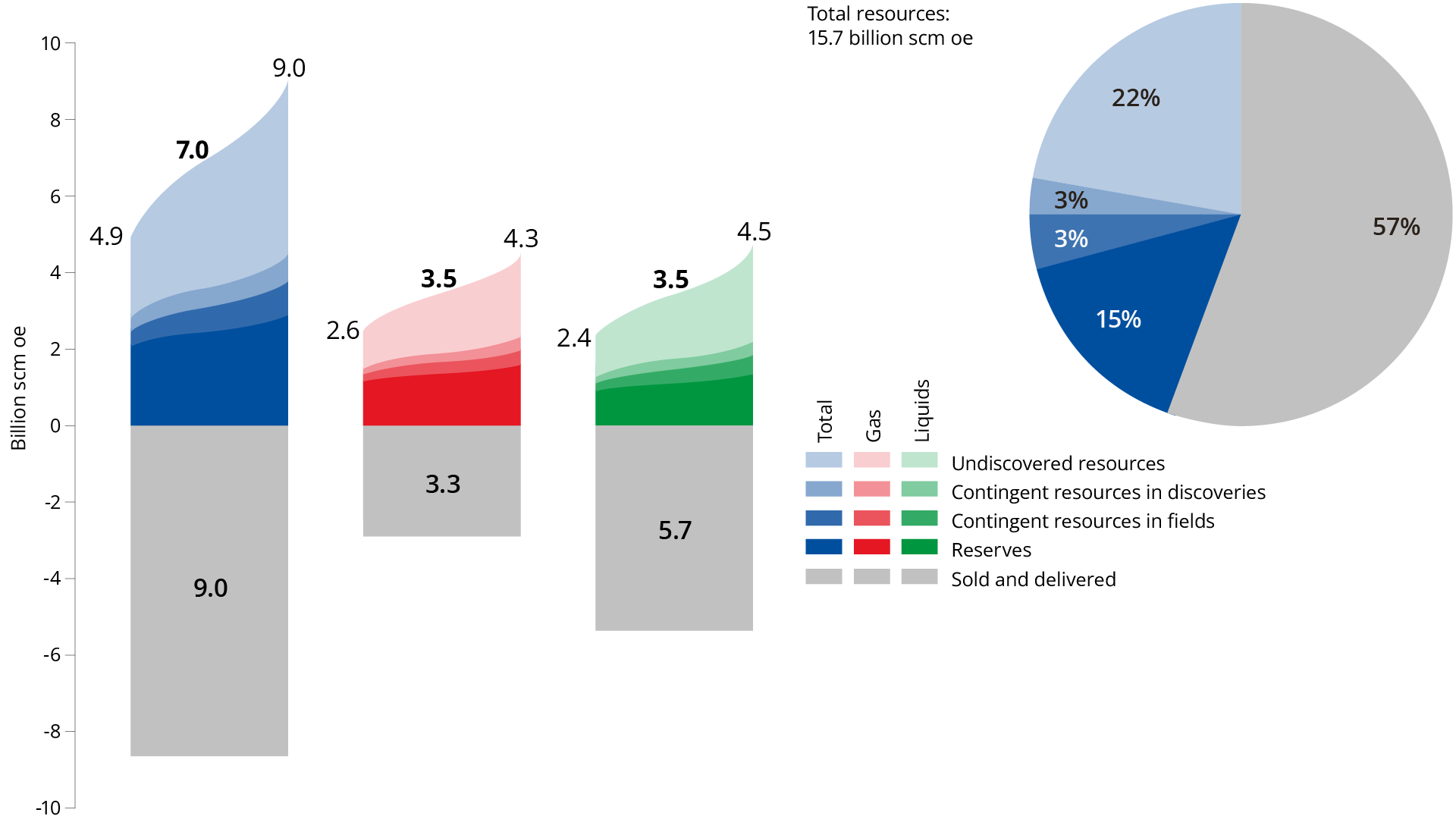
Figure 1.1 Total resources on the NCS as of 31.12.2025 (1). The expected volume of recoverable petroleum is shown in the middle of the bars, and uncertainty in the total estimates is illustrated by a low estimate (P90) to the left and a high estimate (P10) to the right in each bar. The pie chart on the right of the figure shows the distribution by resource class for the expected volume of the total resources.
The remaining resources are unevenly distributed across the sea areas. The North Sea and the Barents Sea currently have about the same total resource volumes, but there is a large difference in maturity (Figure 1.2).
About sea areas
The Norwegian Offshore Directorate uses delimitation of the Barents Sea, the Norwegian Sea and the North Sea in accordance with the management plan for Norwegian sea areas, which deviate from purely geographical or geological definitions.
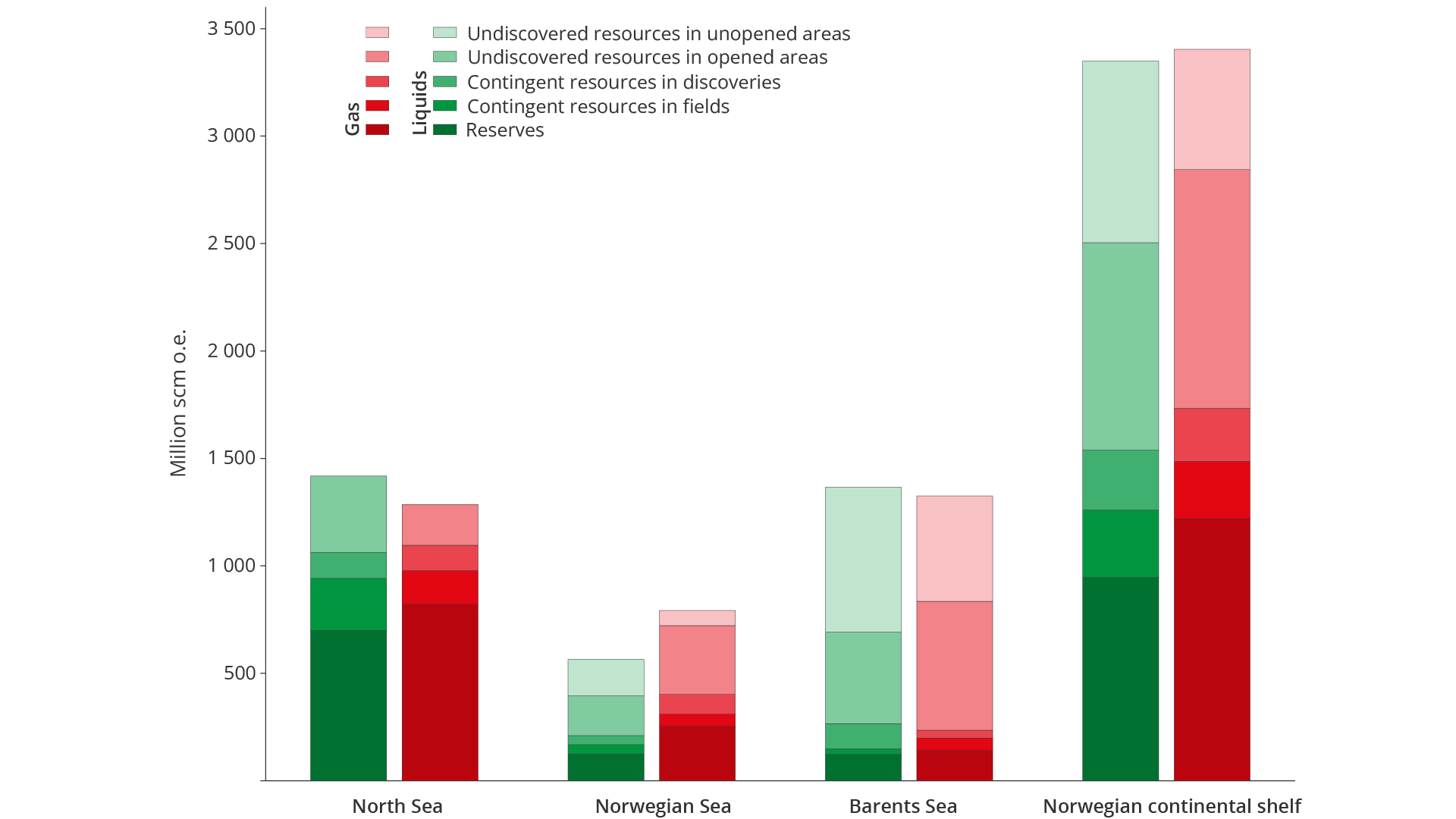
Figure 1.2 Remaining resources on the NCS as of 31.12.2025 by sea area.
In the North Sea, most of the resources consist of reserves and contingent resources that have already been approved or assessed for recovery. This reflects 60 years of exploration, development and operation, and relatively low uncertainty related to the resource base.
In the Barents Sea, most of the resources remain undiscovered. The sea area has few fields in production, and large parts of the expected resource base have not yet been proven. This provides considerable long-term potential, but also greater uncertainty and a longer time horizon before the resources can be recovered.
The Norwegian Sea lies between these extremes, with a mix of mature resources in fields and discoveries and considerable undiscovered potential.
High activity – great values
The petroleum industry is Norway's largest industry measured in value creation, government revenues, investments and export value. In 2026, the industry is expected to account for 22 per cent of total value creation and 47 per cent of export values (Figure 1.3). More than 210 000 people are directly or indirectly connected to the petroleum industry (2).
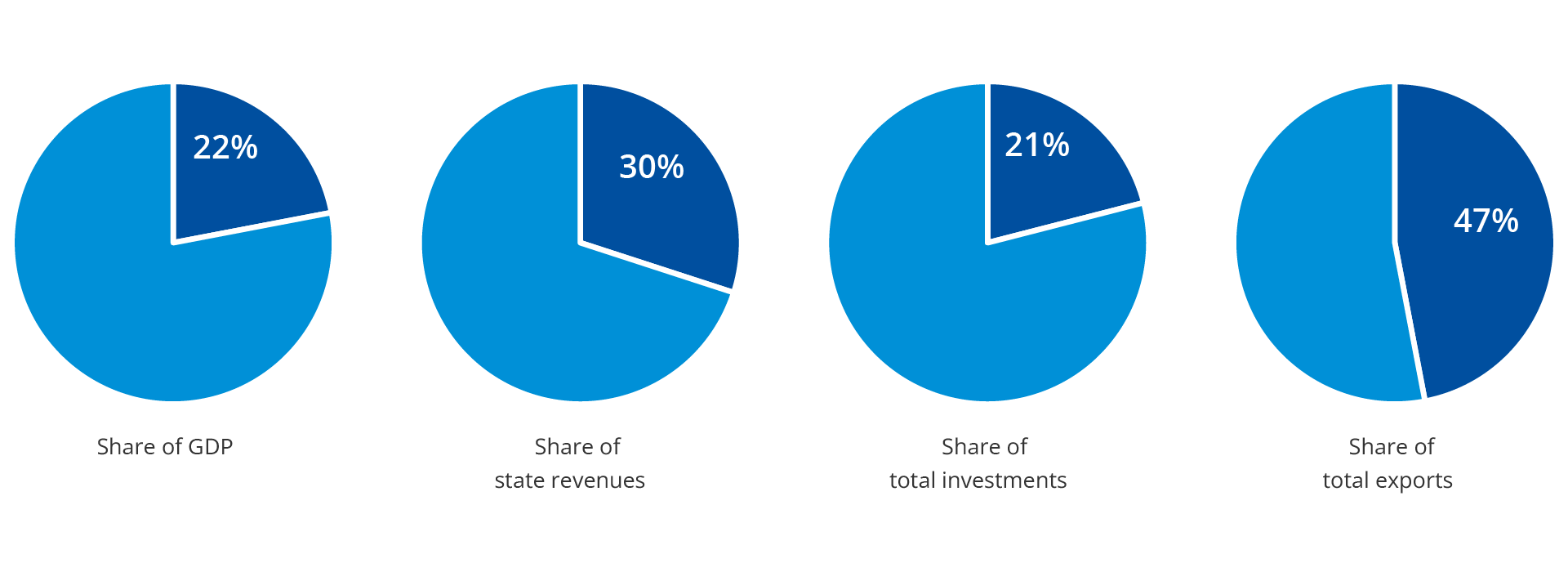
Figure 1.3 Macroeconomic indicators for the petroleum sector in 2026 (3).
Oil production in 2025 was the highest since 2009. At the same time, exploration activity was high, with 50 spudded exploration wells and 21 discoveries. This shows that the NCS is still an attractive and productive area for exploration and production. The ongoing activity lays the foundation for continued value creation in the decades to come.
Investments in the petroleum industry for 2026 are estimated at approximately NOK 230 billion. The high level of investment reflects strong confidence within the industry in both future profitability and the resource base on the NCS.
Exploration is crucial
Exploration is crucial for long-term production development. A large part of the production expected in the future comes from resources which have not yet been proven. Exploration activity is primarily concentrated in well-explored areas, which yields many small discoveries, good returns and contributes to extending production on existing fields.
At the same time, this results in limited resource growth (Figure 1.4). To strengthen long-term production, more exploration must be carried out in underexplored areas, where the probability of larger discoveries is higher.
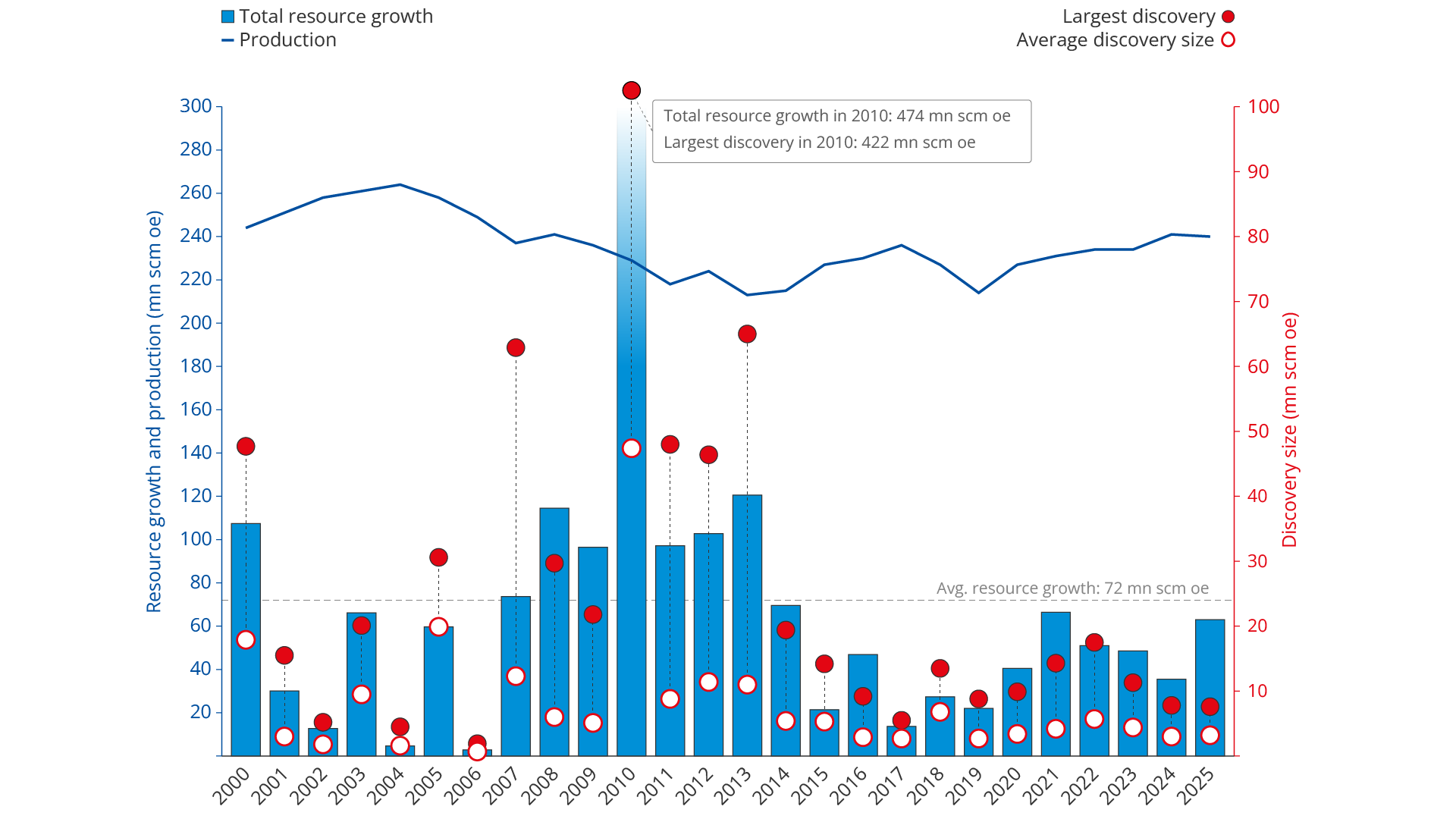
Figure 1.4 Average discovery size, largest discovery, resource growth and production per year, 2000–2025 (excluding resource class 6)
Production up to 2035
Total production is expected to remain high until the end of the 2020s. Forecasts show that production will then gradually decline to around 160 million Sm³ of oil equivalent in 2035.
Resources in fields and discoveries are becoming increasingly important leading up to 2035 and account for an increasing share of production (Figure 1.5). To avoid a steep decline in production, it is essential to develop the remaining resources in fields and discoveries.
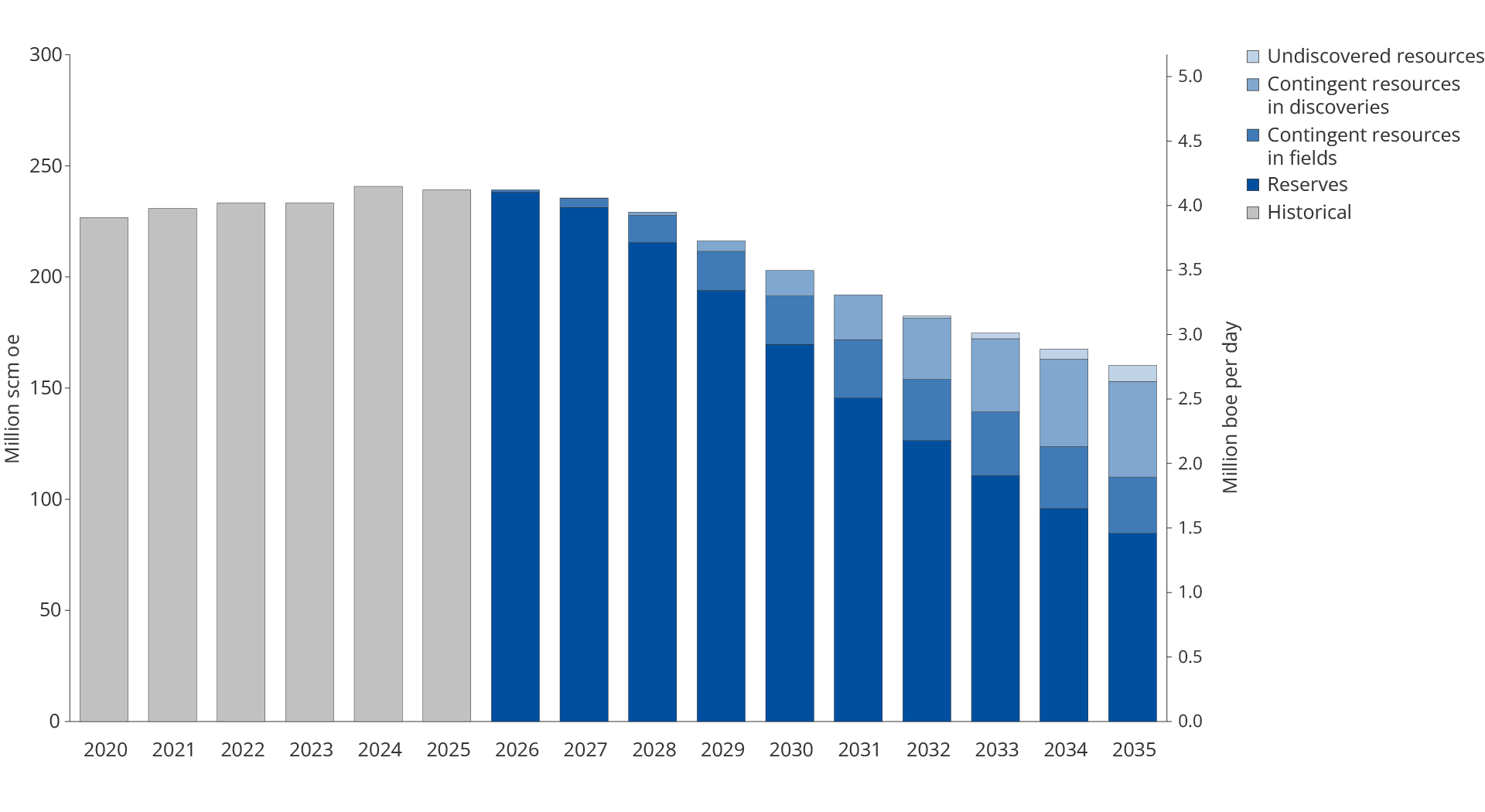 Figure 1.5 Production development on the NCS up to 2035 based on reporting to the Revised National Budget 2026 (RNB 2026)
Since the turn of the millennium, the number of producing fields has increased significantly, while average production per field has fallen. Several large fields which have accounted for most of the production are now mature (Figure 1.6). The expected decline in production in these fields can be counteracted to some extent by developing several smaller discoveries and developing more demanding resources.
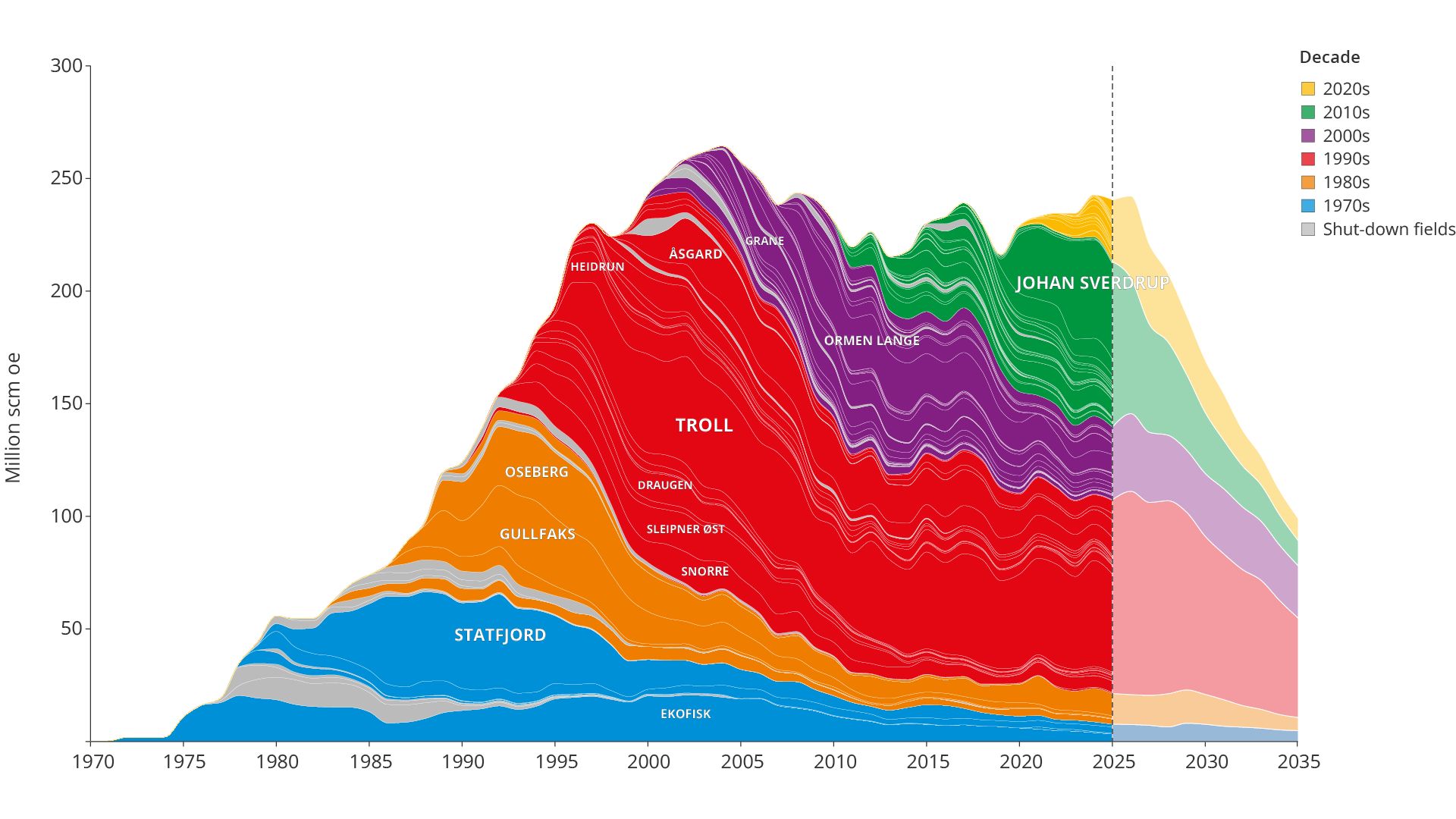
Figure 1.6 Historical production development and production forecast
Improved recovery extends lifetime
Improved recovery from existing fields is one of the most important tools for slowing down the decline in production. Although the NCS already has a high recovery rate, moderate improvements can yield large volume gains, given the size of the overall field portfolio.
Several measures can extend the fields‘ lifetime and increase resource utilisation. This includes the drilling of additional production wells, tie-in of new discoveries, new well technology, improved injection methods and advanced reservoir monitoring.
The NCS has several examples of fields originally planned to be shut down a long time ago, which are still producing due to improved recovery, technology development and ongoing investments in further development. Ekofisk, Statfjord, Oseberg and Valhall are examples of how active resource management can extend field lifetimes significantly and create substantial added value. As Figure 1.7 illustrates, production from a number of fields has been extended significantly beyond the lifetime assumed upon PDO approval.
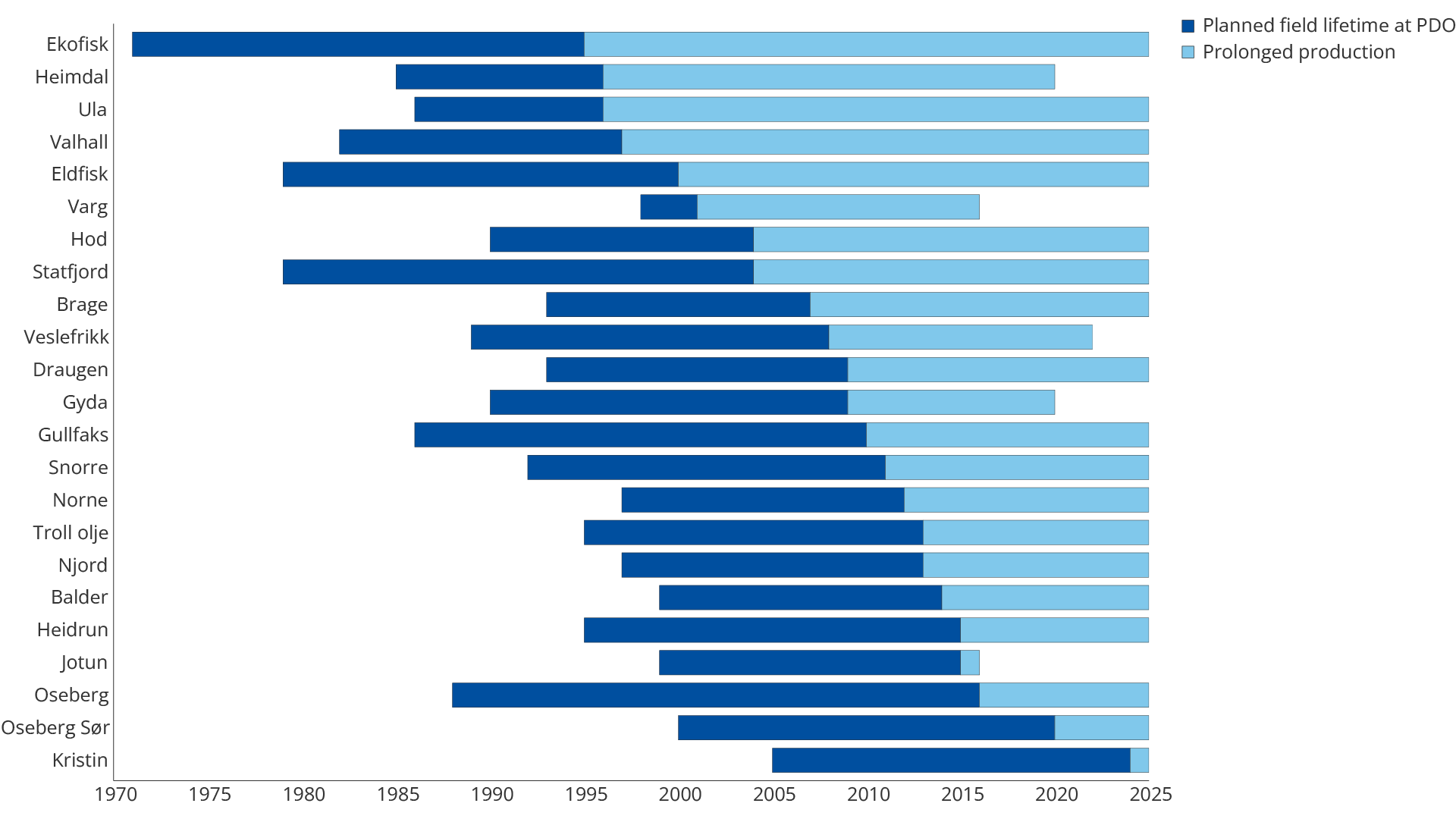
Figure 1.7 Extended production for selected fields in relation to previous plans, sorted by planned production cessation under the Plan for Development and Operation (PDO). The forecast is not shown here.
Infrastructure, discoveries and fields – interdependence
The infrastructure on the NCS, such as pipelines, processing platforms, hubs and receiving terminals, is crucial for production and value creation. A large part of this was established in the 1980s and ‘90s and is dimensioned for higher production than many fields currently deliver. Lower throughput results in higher unit costs, reduces profitability and increases the likelihood of earlier shutdowns.
The close link between fields and infrastructure means that shutdown decisions must be considered in context. The closure of one processing facility could cause neighbouring fields and early-stage discoveries to lose their sole connection, potentially triggering domino effects and accelerating production decline in entire areas. Since most new discoveries are small and dependent on existing capacity, the time window for realising their potential is limited.
Strengthening diversity with companies that are willing and able
In the 2000s, there were many international companies on the NCS. The shelf is now dominated by a few large, Norwegian-based operating companies (Figure 1.8). This can provide advantages in the development and operational phase but can be challenging in the exploration phase.
Fewer players may result in less diversity in geological assessments and thus reduce the likelihood of proving new, large discoveries, particularly in underexplored areas.
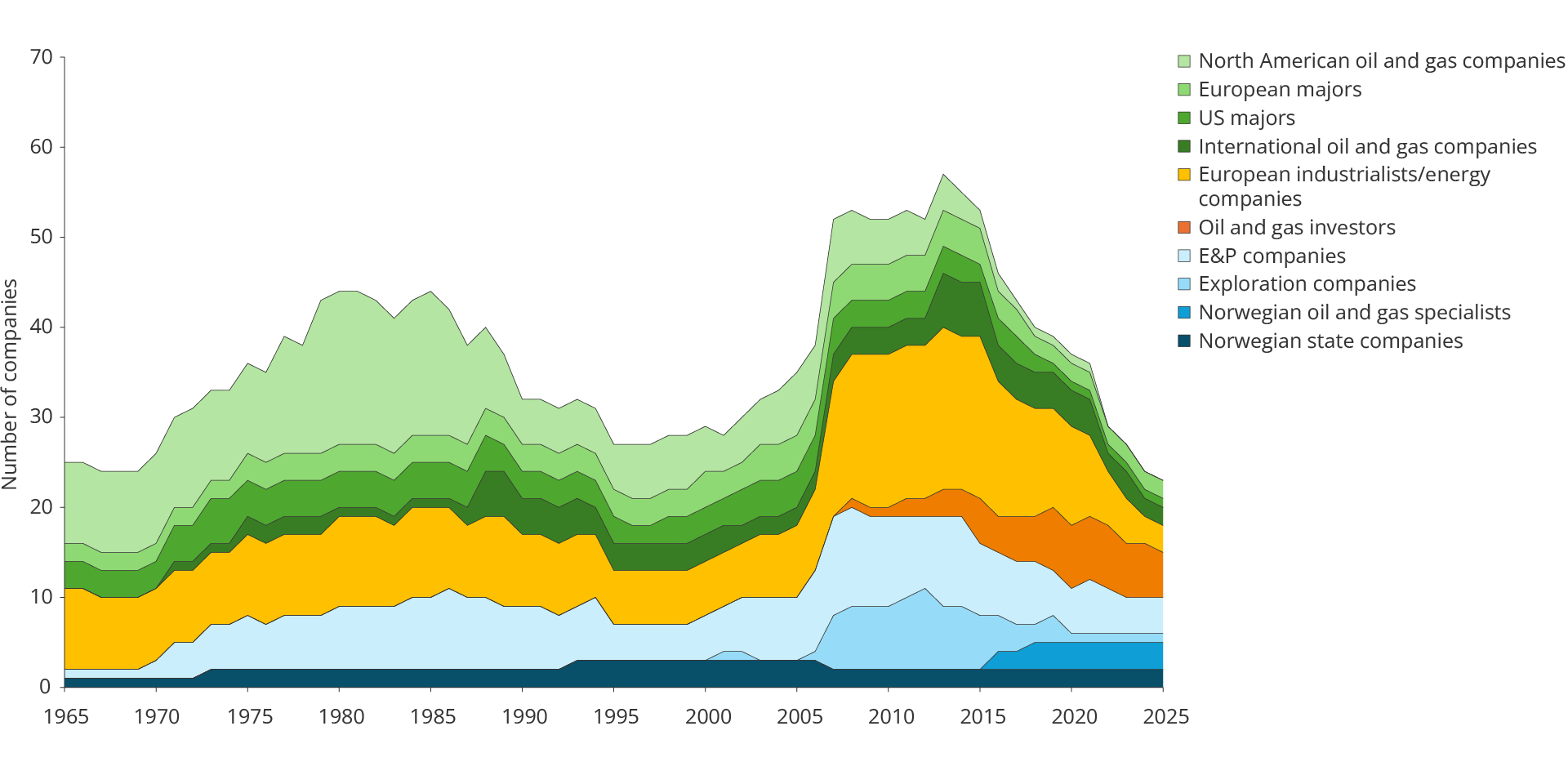
Figure 1.8 Development in the number of oil and gas companies on the NCS (1965–2025)
The High North
The High North has the largest remaining resource potential on the NCS (Figure 1.9). Large areas of the Barents Sea remain underexplored, and significant areas have not been opened for petroleum activities.
The gas resources in the Barents Sea represent the most significant potential for Norwegian gas deliveries in the long term. Realisation of the potential requires the development of infrastructure, particularly related to increased gas export capacity.
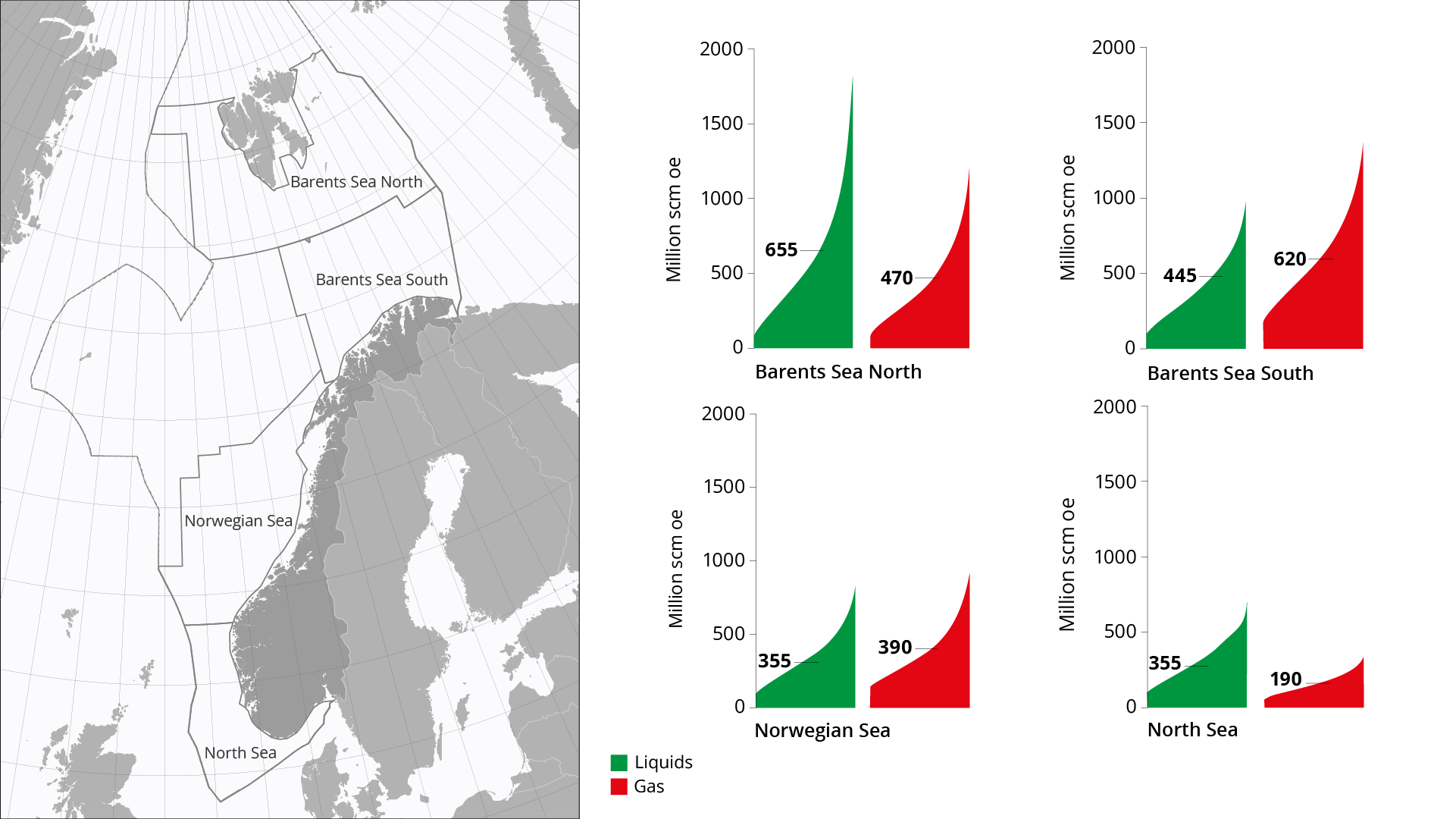
Figure 1.9 Distribution of undiscovered liquids and gas in the various sea areas with uncertainty ranges (4)
Three scenarios
The future of the NCS up to 2050 will depend on international drivers, Norwegian policies and developments on the shelf. This provides a wide scope for outcome and action, as illustrated by the Norwegian Offshore Directorate's three scenarios (Figure 1.10).
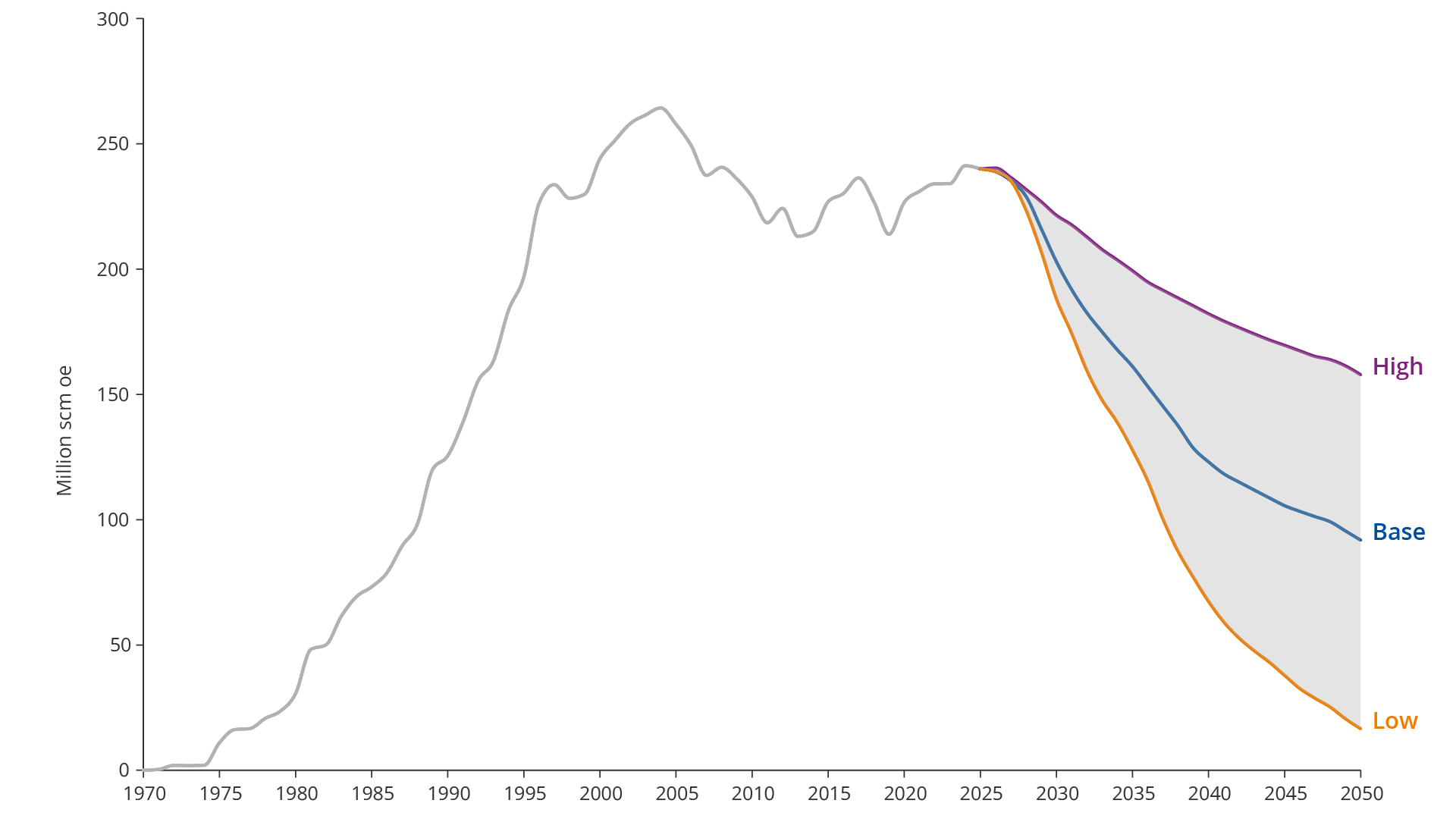
Figure 1.10 Three scenarios for petroleum production on the NCS up to 2050
All scenarios show a decline in production over time, but the pace and scope depend on exploration activity, technology development and willingness to invest.
The resource estimate on which they are based does not represent an upper limit for the potential on the NCS. A higher resource base than expected, permanently higher prices, technological breakthroughs or the opening of new areas can each increase the probability of higher production than that depicted by the scenarios.
Competence and technology development
Realisation of the value potential and slowing down the decline in production require expertise in the petroleum disciplines to be maintained and further developed. Seismic surveys, drilling of wells, subsea developments and improved recovery projects are examples of activities that contribute to maintaining and further developing this expertise.
At the same time, petroleum activities have positive ripple effects in other parts of the economy through a knowledge-intensive, high-tech supplier industry. The expertise and technology are also transferable to offshore wind, CO₂ storage and other industries, and thus have significance beyond petroleum activities.
Updated: 9/2/2026