Sokkeldirektoratet

Gas/condensate discovery in the North Sea
deepsea-yantai-odfjell-drilling.jpg

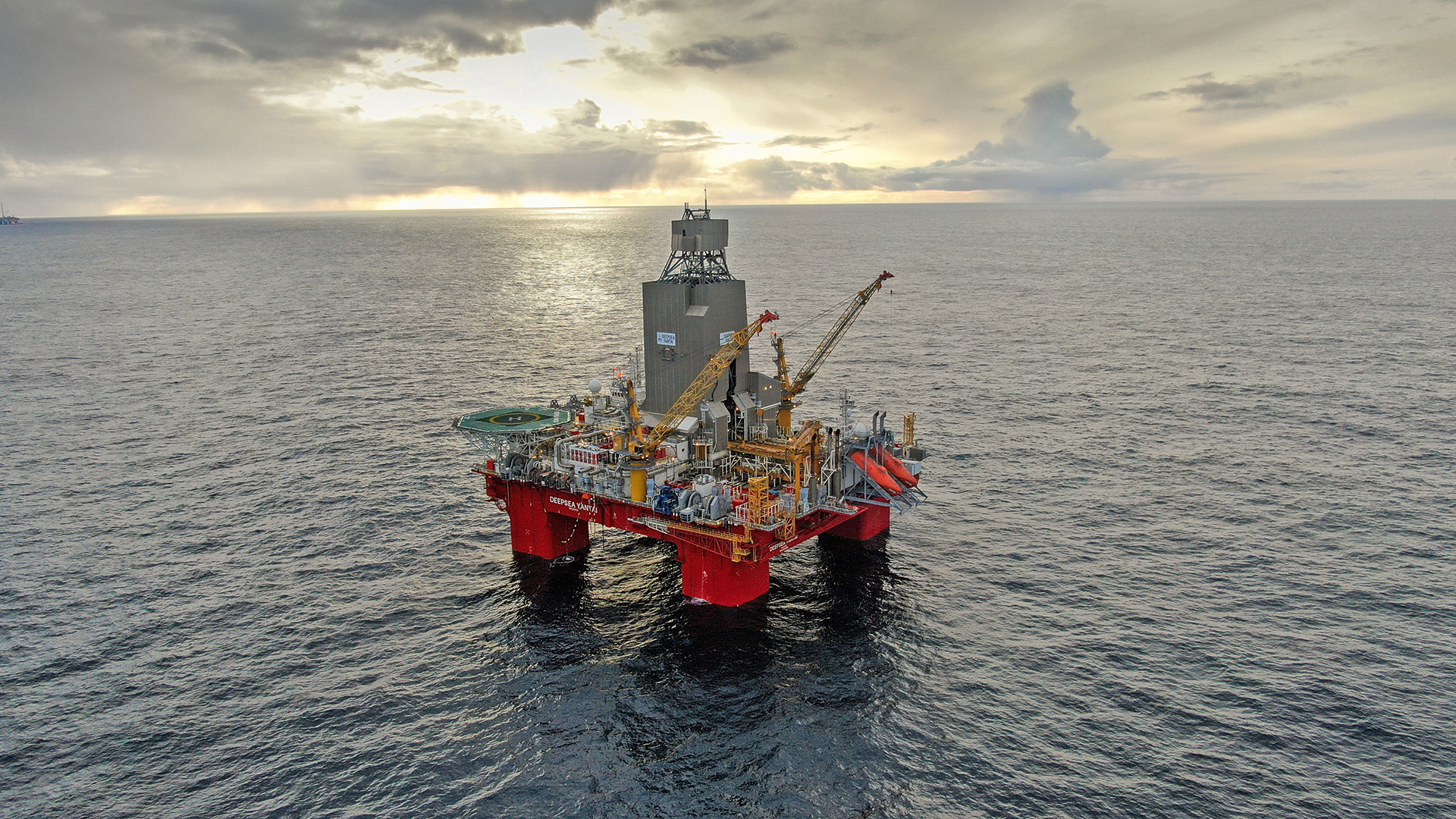
The “Norma” well was drilled by the Deepsea Yantai exploration rig. Photo: Transocean

9/27/2023 DNO Norge is concluding the drilling of exploration well 25/7-11 S “Norma” in the North Sea. Recoverable gas/condensate volumes of between 2-21 million Sm3 were proven.

The “Norma” well was drilled by the Deepsea Yantai exploration rig about 20 km north of the Balder field in the central part of the North Sea and 215 km west of Stavanger.

This well result is important for future exploration and development in the area. The licensees will further assess the well result to delineate the discovery and investigate nearby prospects in the production licence.

DNO Norge is the operator with 30 per cent of the production licence. The other licensees are Equinor (20 per cent), Aker BP (10 per cent), Vår Energi (20 per cent) and Source Energy (20 per cent).

This is the first exploration well in production licence 984, which was awarded in the Awards in predefined areas (APA) in 2018.

Several exploration wells have previously been drilled in this area. ConocoPhillips drilled 25/7-7 “Busta” in 2019, resulting in the discovery of gas/condensate.

Geological information

The objective of the well was to prove petroleum in Upper Jurassic reservoir rocks in the Draupne Formation.

Well 25/7-11 S encountered a 16-metre gas/condensate column in the Draupne Formation, of which 13 metres were net reservoir in sandstone layers totalling 19 metres with moderate to good reservoir quality. It is uncertain if the petroleum/water contact was encountered.

The well was not formation-tested, but extensive data acquisition and sampling have been performed.

Well 25/7-11 S was drilled to 4786 metres below sea level and was terminated in the Heather Formation in the Middle to Upper Jurassic.

Water depth at the site is 122 metres. The well will be permanently plugged and abandoned.
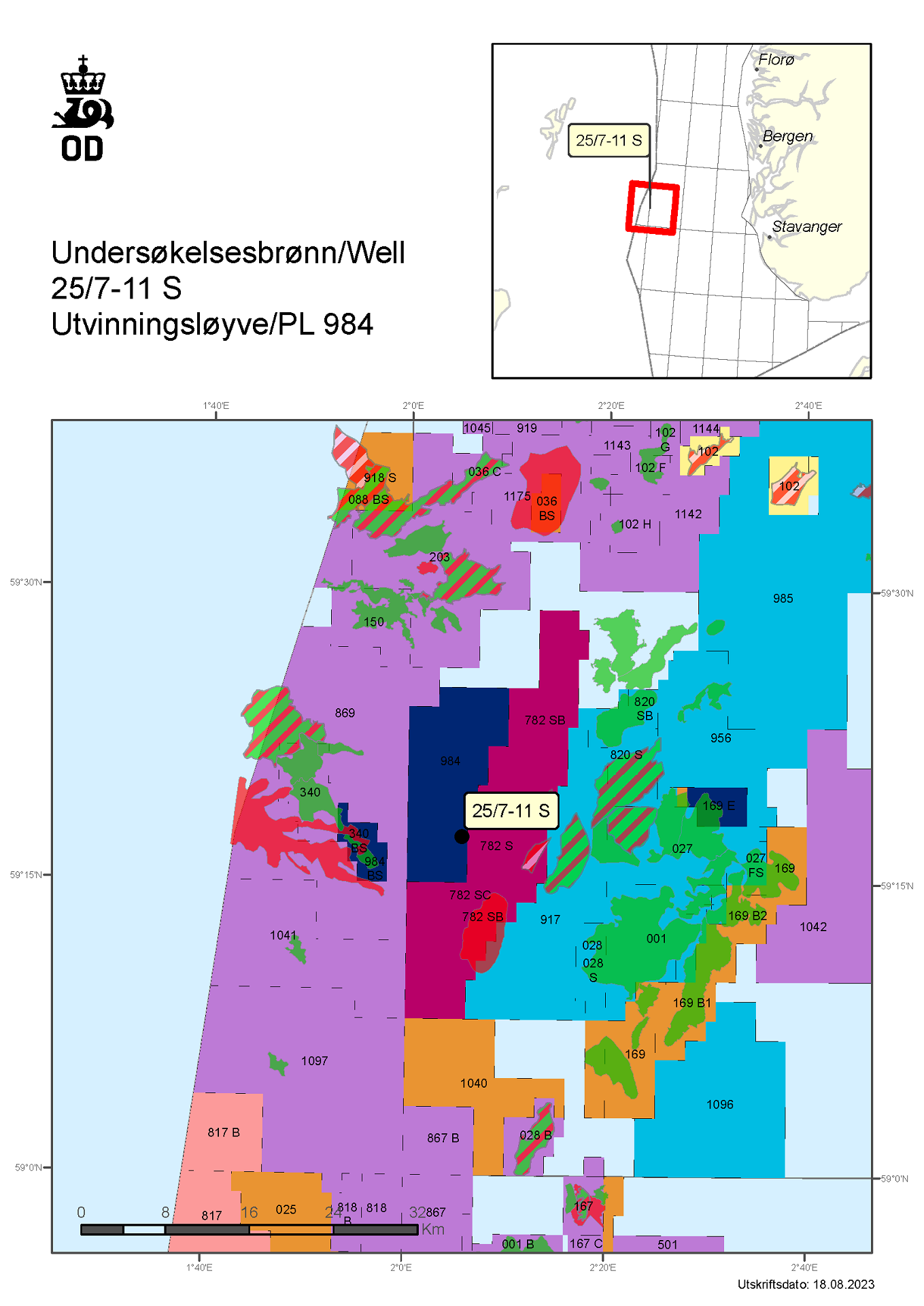
Map showing the location of well 25/7-11 S.


Contact
Bjørn Rasen

Tel: +47 51 87 60 00

Updated: 9/27/2023

Latest news

Gas/condensate discovery in the North Sea (15/5-8 S and A)
12/5/2025 Equinor and its partner Aker BP have discovered hydrocarbons in the "Lofn" and "Langemann" prospects.
Oil and gas discovery in the Barents Sea (7122/7-8)
12/4/2025 Vår Energi and its partners have discovered oil and gas in the "Goliat Nord" prospect.
Who deserves the Improved Recovery Award?
11/25/2025 The time has come to nominate candidates for this prize, which was first awarded in 1998. Back then it was known as the Norwegian Petroleum Directorate’s IOR Award.
Production figures October 2025
11/20/2025 Preliminary production figures for October 2025 show an average daily production of 2 017 000 barrels of oil, NGL and condensate.
Drilling permit for well 33/12-N-3 GH and 33/12-N-3 HH
11/20/2025 The Norwegian Offshore Directorate has granted Equinor Energy AS drilling permit for wellbore 33/12-N-3 GH in production licence 037 B/152 and 33/12-N-3 HH in production licence 037 B/277.
Dry well in the North Sea (2/6-8 S and 2/6-8 ST2)
11/18/2025 DNO and its partners have drilled a dry well in the "Page" prospect in the southern part of the North Sea, about 270 kilometres from Stavanger and 40 kilometres from Ekofisk.
What would you like to learn more about at Technology Day 2026?
11/17/2025 The Norwegian Petroleum Directorate is pleased to announce Technology Day 2026. Save the date – 4 June 2026 – and take this opportunity to nominate speakers for the event!
New Dashboard: Resource stats by company
11/14/2025 Our new Dashboard provides an overview of the licensees’ respective petroleum resources and reserves on the Norwegian continental shelf (NCS).
Delineation of the “Zagato” oil discovery in the Barents Sea – 7122/8-4 S
11/13/2025 Vår Energi's appraisal well 7122/8-4 S confirms the 7122/8-3 S (“Zagato”) oil discovery, which was proven in February.
New technology is profitable when shutting down wells
11/13/2025 About 2900 wellbores on the Norwegian continental shelf (NCS) will be plugged and shut down in the years to come, but development and implementation of new technology can save the industry and society considerable costs.