Maturing a CO2 storage site in the North Sea Basin: a story about the Johansen Formation

Longship is the name of the project for capture, transport and storage of CO2. Illustration: Ministry of Petroleum and Energy, Miksmaster Creative.
10/21/2020 This year a new milestone was reached for CO2 storage in the North Sea basin. The first exploration well was drilled in the exploitation license and a development plan was submitted to the authorities.
The Northern Lights partnership, Equinor, Shell and Total, submitted a development plan, PDO, for EL001 to the Ministry of Petroleum and Energy.
CO2 will be stored in the Johansen Formation south of the Troll field. Read the story about finding a CO2 storage site and milestones.
Extensive experience
Norway has extensive experience with storing CO2 in geological structures. Since 1996, approximately 1 million tonnes of CO2 have been captured annually from the produced hydrocarbon gas at the Sleipner West field in the North Sea. The CO2 is injected for storage in the Utsira Formation, a geological formation above the natural gas field, but more than 800 meters below the seabed.
The Utsira Formation is a sandstone formation with excellent reservoir quality that belongs to the huge Utsira-Skade aquifer. The injected CO2 is buoyant and accumulates in a gentle structural closure below the overlying shale caprock.
Gas production from the Gudrun and Utgard fields was tied in to the processing facility on Sleipner in 2014 and 2019, respectively, thus contributing to the CO2 volumes stored in the Utsira Formation.
In connection with treatment of the well stream from the Snøhvit field in the Barents Sea, for LNG production on Melkøya, about 0.7 million tonnes of CO2 have been safely injected and stored in the Tubåen Formation and the Stø Formation on an annual basis.
CO2 storage offshore
The CO2 storage site in the Johansen Formation within exploitation license 001 (EL001) will be the third CO2 storage site developed offshore in Norway. It is named Northern Lights (NL) and is the transport and storage part of the Longship CCS project.
It can take several years to mature a possible CO2 storage site to the point where it is ready for CO2 injection. The timeline presented here shows which initiatives preceded the decision to submit a Plan for Development and Operation (PDO) for the NL project.
The selection processes for CO2 storage reservoirs for the gas fields Sleipner Vest and Snøhvit were constrained by the field development plans for their associated petroleum projects, while the selection process for NL has been different, since it is not tied to field development for petroleum production.
The selection process for possible CO2 storage sites started with a screening process on the Norwegian Continental Shelf (NCS) in 2007. This was further matured in several stages, and this effort will carry on into the future as additional CO2 storage sites are expected to be developed.
More information
See the CO2 atlas made by the Norwegian Petroleum Directorate
Proposition to the Storting about Longship – carbon storage and capture (Norwegian only)
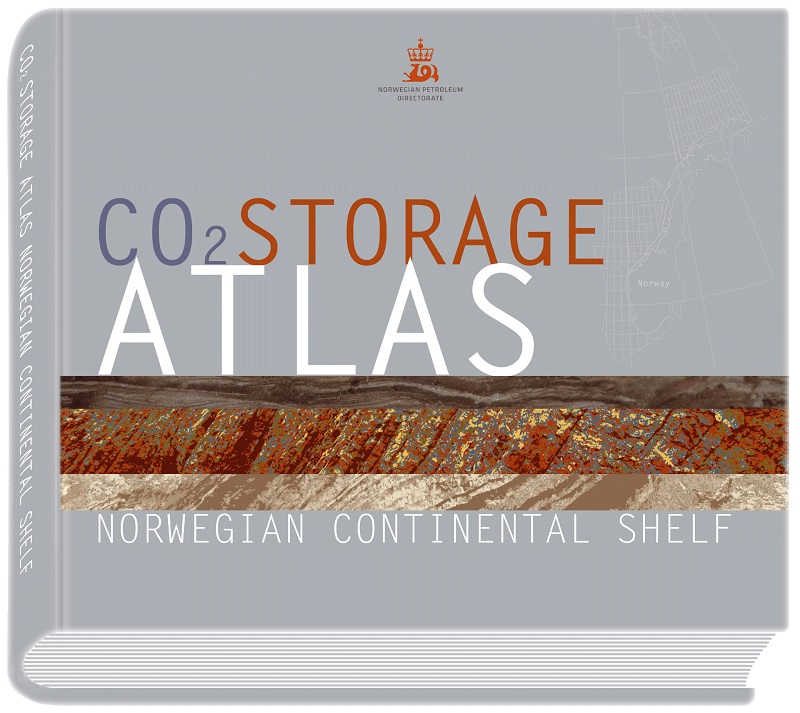
The CO2 atlas made by the Norwegian Petroleum Directorate.
Updated: 10/21/2020