Advanced methods can curb production decline
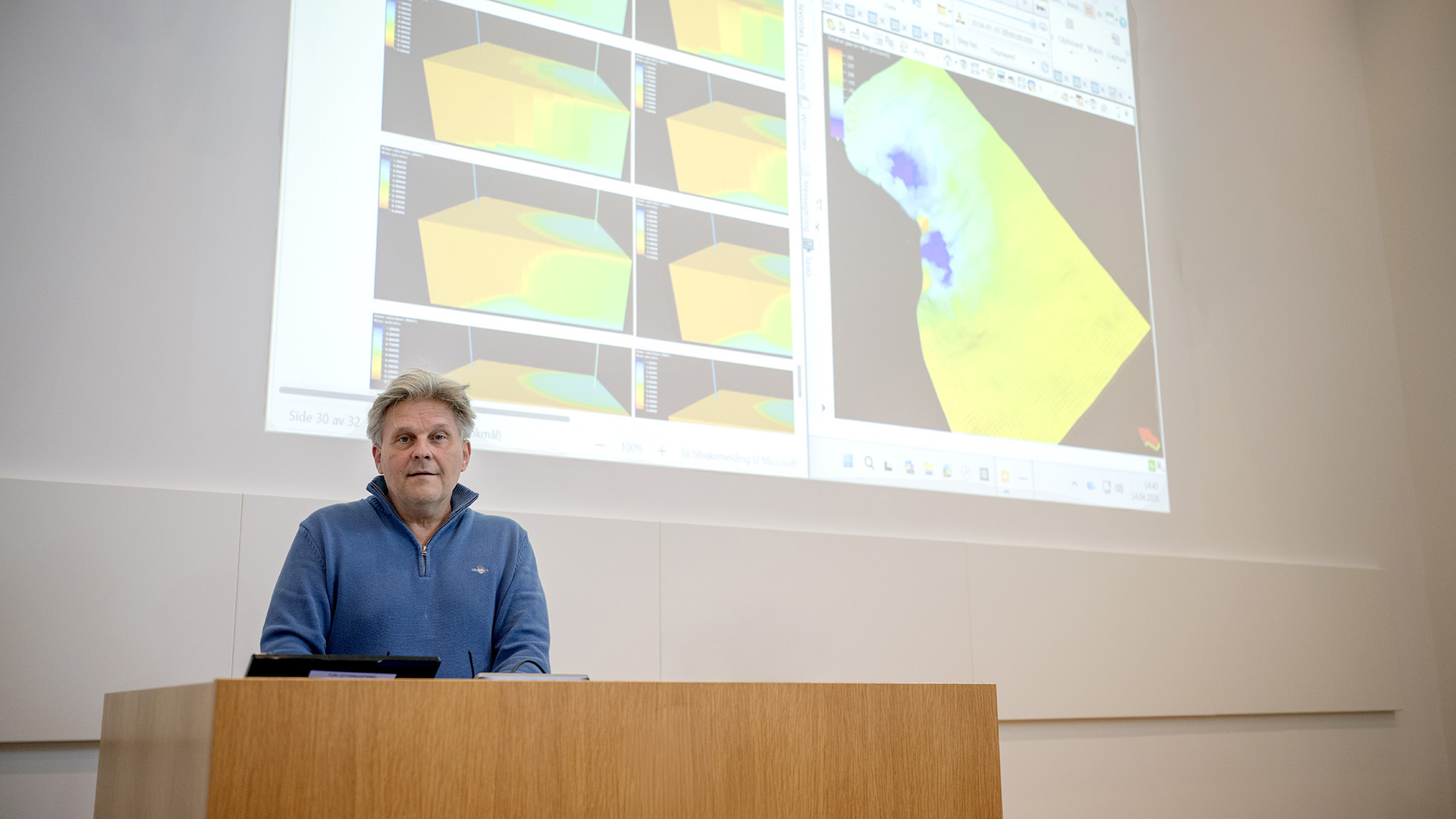
Ove Bjørn Wilson is a senior reservoir engineer at the Norwegian Offshore Directorate. He leads a project to investigate opportunities for using advanced recovery methods (EOGR) on the NCS. Photo: Linn Smerud
4/15/2026 There is no time to waste if we want to extract more oil and gas from the Norwegian continental shelf (NCS) using advanced methods (EOGR). The benefits for our broader society could be enormous.
According to a study conducted by experts from Imperial College (Norwegian only) a few years ago, on assignment from the Norwegian Offshore Directorate, there are huge opportunities for increasing production of oil and gas using EOGR (enhanced oil and gas recovery) on the NCS.
“One of the Directorate’s most important priorities is to support measures that can curb the expected decline in production from the NCS. There is a significant gap between the identified EOGR opportunities and the few pilot projects that have actually been pursued,” says Ove Bjørn Wilson, senior reservoir engineer at the Norwegian Offshore Directorate.
Could match Johan Sverdrup production
In 2026, the Ministry of Energy assigned the Directorate the task (Norwegian only) (PDF) of “contributing to realise profitable development using advanced EOGR methods”.
That's why an internal task force has begun the work of looking at projects that have not yet been completed or implemented. This work builds on the study from Imperial College, which estimated the theoretical potential for enhanced recovery using advanced methods at 350-700 million standard cubic metres of oil equivalent.
“There is still uncertainty as to how much of this could actually yield profitable increased recovery. We could be talking about quantities that match the entire production from the Johan Sverdrup field. This could have a significant impact on activity on the NCS, and yield vast revenues for both the industry and society in general,” Wilson says.
Several promising EOGR methods have been evaluated in the past, aimed at specific fields. However, they were abandoned due to challenging technical feasibility, the companies’ profitability requirements, costs associated with environmental considerations, or limited access to suitable injection sources.
EOGR implemented in other countries
EOGR has been tested and implemented offshore in other parts of the world.
“This shows that EOGR is technically feasible and profitable under conditions comparable to the NCS. In our efforts now, we’ll be thinking outside the box, looking at alternatives we haven’t previously investigated,” says Wilson.
On this basis, the Norwegian Offshore Directorate is assessing which fields may have suitable geological and technical conditions in the subsurface to allow for implementation of an EOGR pilot. At the same time, the Directorate is analysing at what point in a field’s lifetime such a measure could still yield profitable production, and when it may be too late.
“The objective is to identify fields that are well-suited for profitable production with the aid of advanced methods, which the operators should examine in more detail. This is urgent work, as the development of the NCS is already mature,” he says.
Moreover, it’s not a given that all late-life fields are suitable candidates for EOGR.
“We need to find the right method for each individual field, taking into account the field’s existing recovery strategy. In fact, everything that’s been done on a field up to the present has an impact on whether or not it may be profitable to implement enhanced recovery using advanced methods,” Wilson says.
Updated: 4/15/2026