
The Resource Report 2026: Summary
The Norwegian continental shelf is an important petroleum province with considerable resource potential and can play a significant role in long-term value creation.
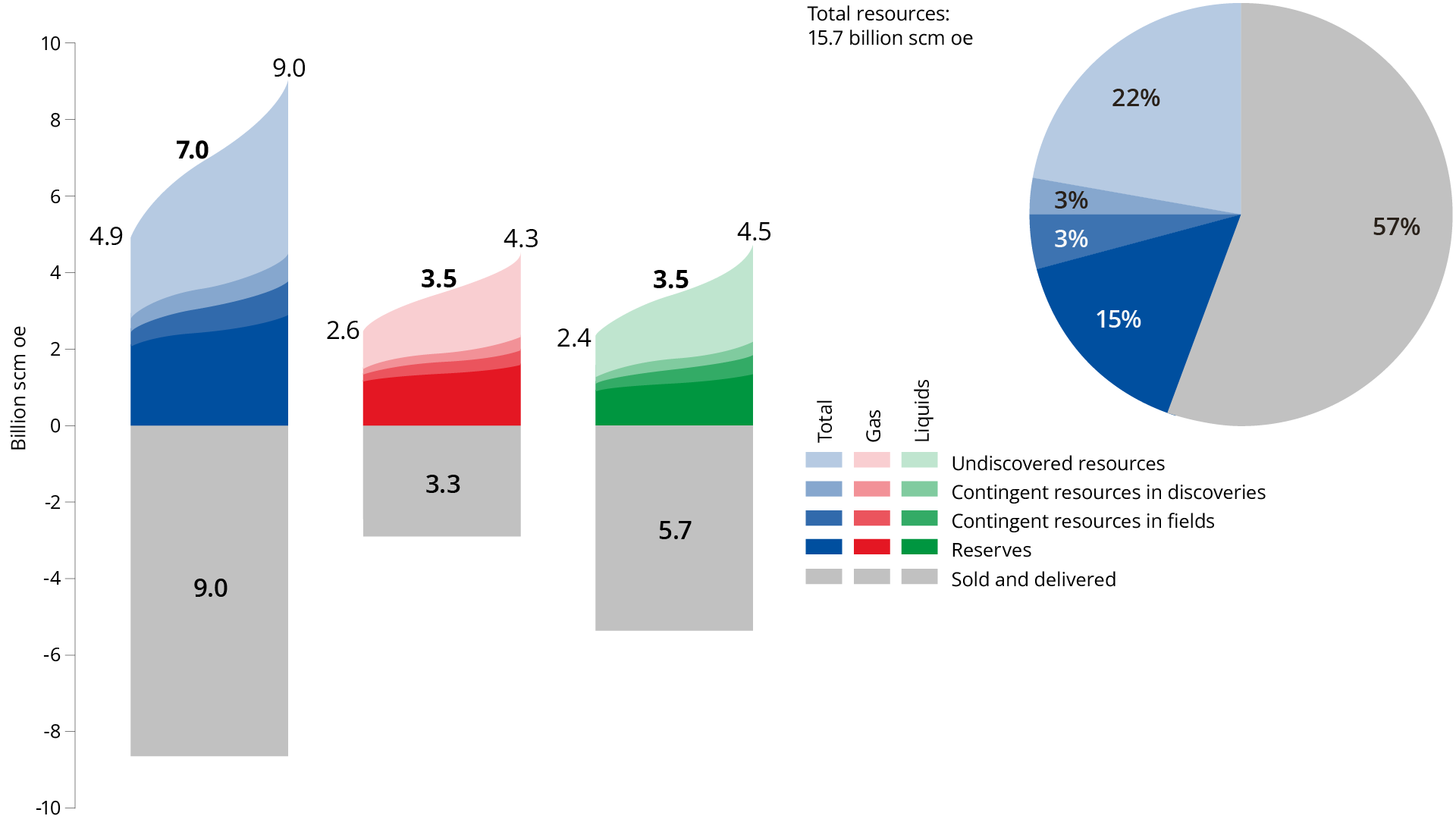
Total resources on the Norwegian continental shelf as of 31.12.2025 . The expected volume of recoverable petroleum is shown in the middle of the bars, and uncertainty in the total estimates is illustrated by a low estimate (P90) on the left and a high estimate (P10) on the right in each bar. The pie chart to the right of the figure shows the distribution by resource categories for the expected volume of the total resources.
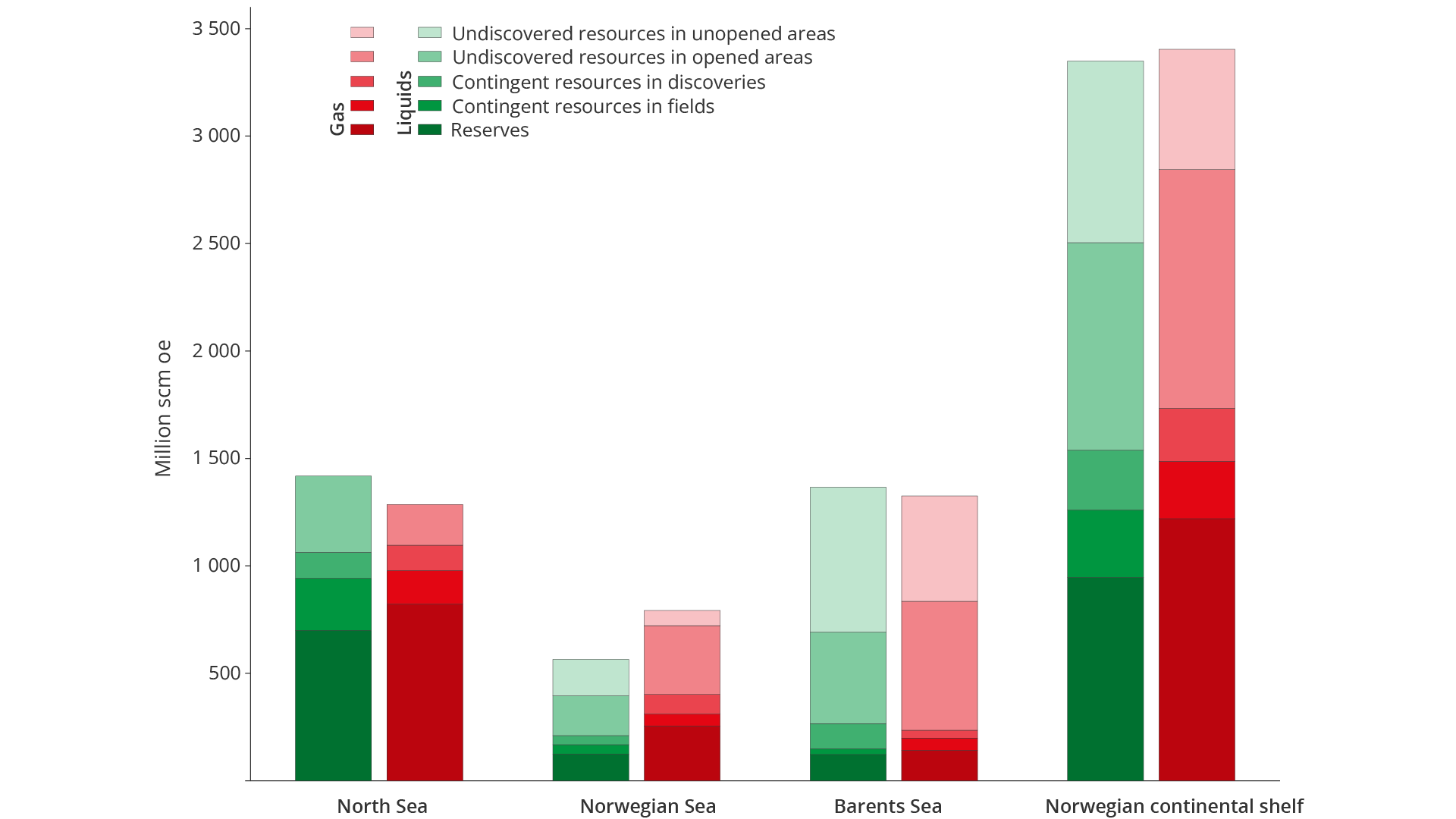
Remaining resources on the Norwegian continental shelf as of 31.12.2025 by sea area.
High activity level
The activity level on the NCS is high. Oil production in 2025 reached its highest since 2009, and investments for 2026 are estimated at approximately NOK 230 billion. The high level of investment reflects strong confidence in the resource base and future profitability.
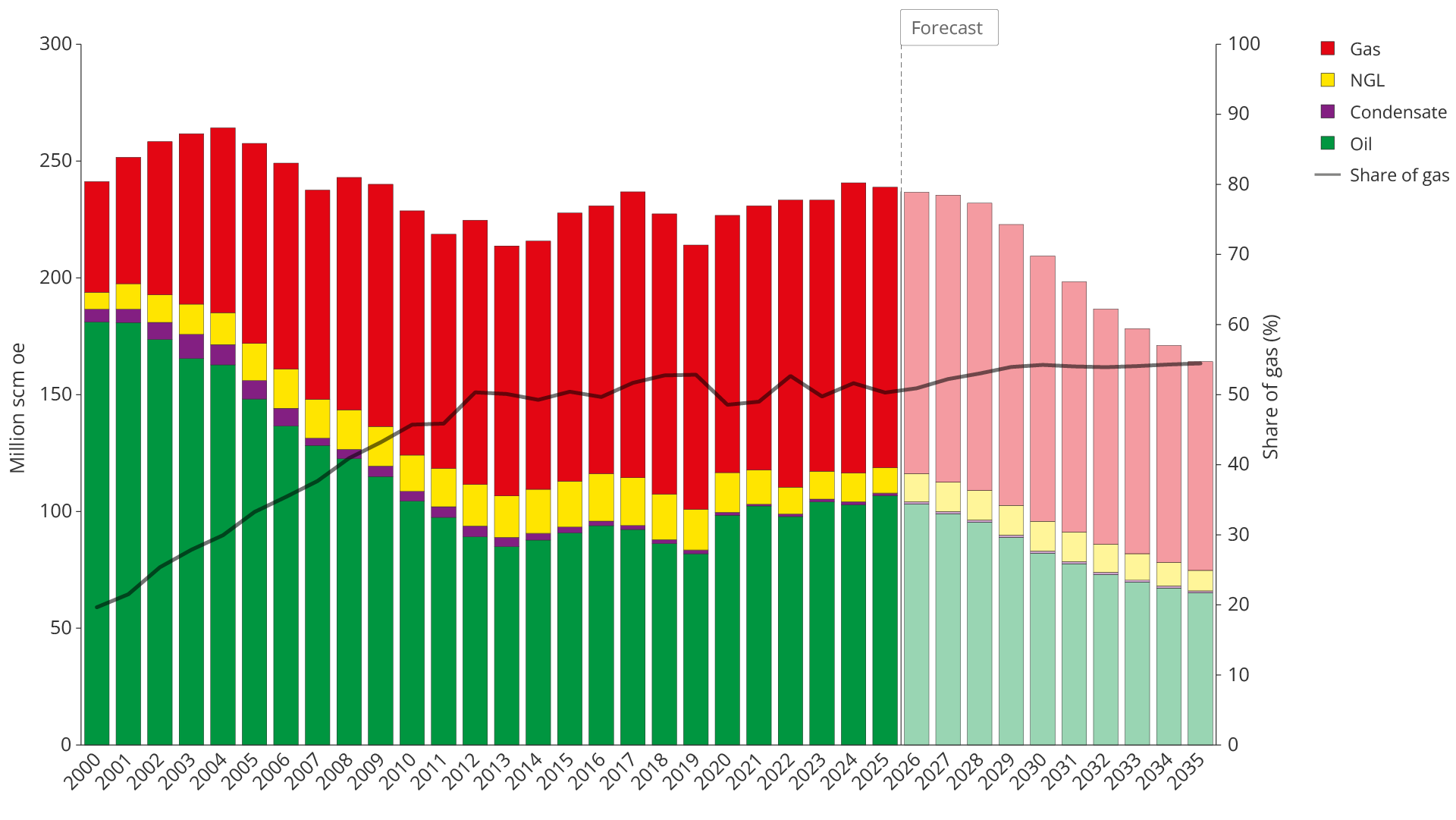
Historical production development since 2000 and forecasts up to 2035.
Norway's largest industry
The petroleum industry is the largest industry in the Norwegian economy, measured in terms of value added, government revenues, investments and exports. In 2026, it is expected to account for 22 per cent of total value added and 47 per cent of export values.
More than 210,000 people are directly or indirectly linked to the industry. What happens on the shelf in the coming decades is therefore not just about oil and gas, but about incomes, jobs and expertise for society as a whole.
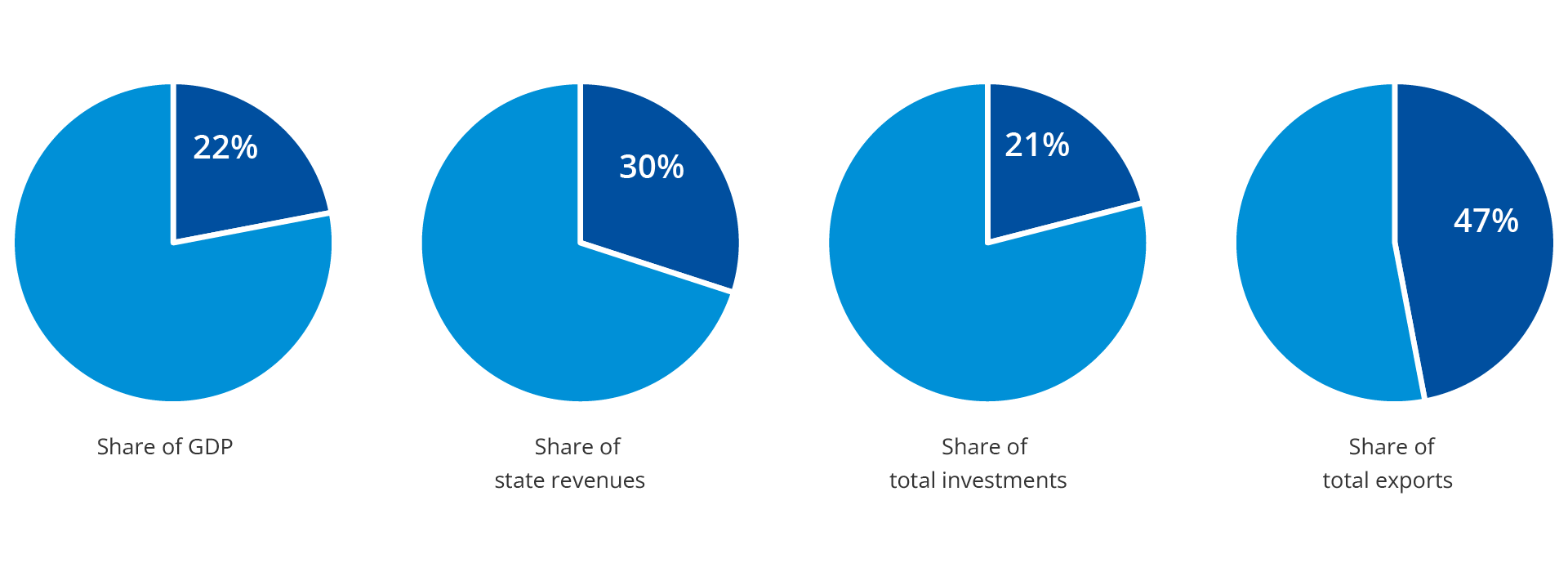
Macroeconomic indicators for the petroleum sector in 2026.
Resources for long-term production
The total expected remaining resources are estimated at approximately 7 billion standard cubic metres of oil equivalent. Around half of these have not yet been discovered.
This estimate provides a basis for production, exports and value creation for society for a long time to come.
But this type of progress does not happen by itself. Production is expected to remain high until the end of the 2020s and then decline. To halt the decline, more exploration is needed, both in well-explored areas and in underexplored areas. In addition, more investments must be made in fields, discoveries, infrastructure and technology development. A lack of investment will lead to a rapid dismantling of the petroleum industry.
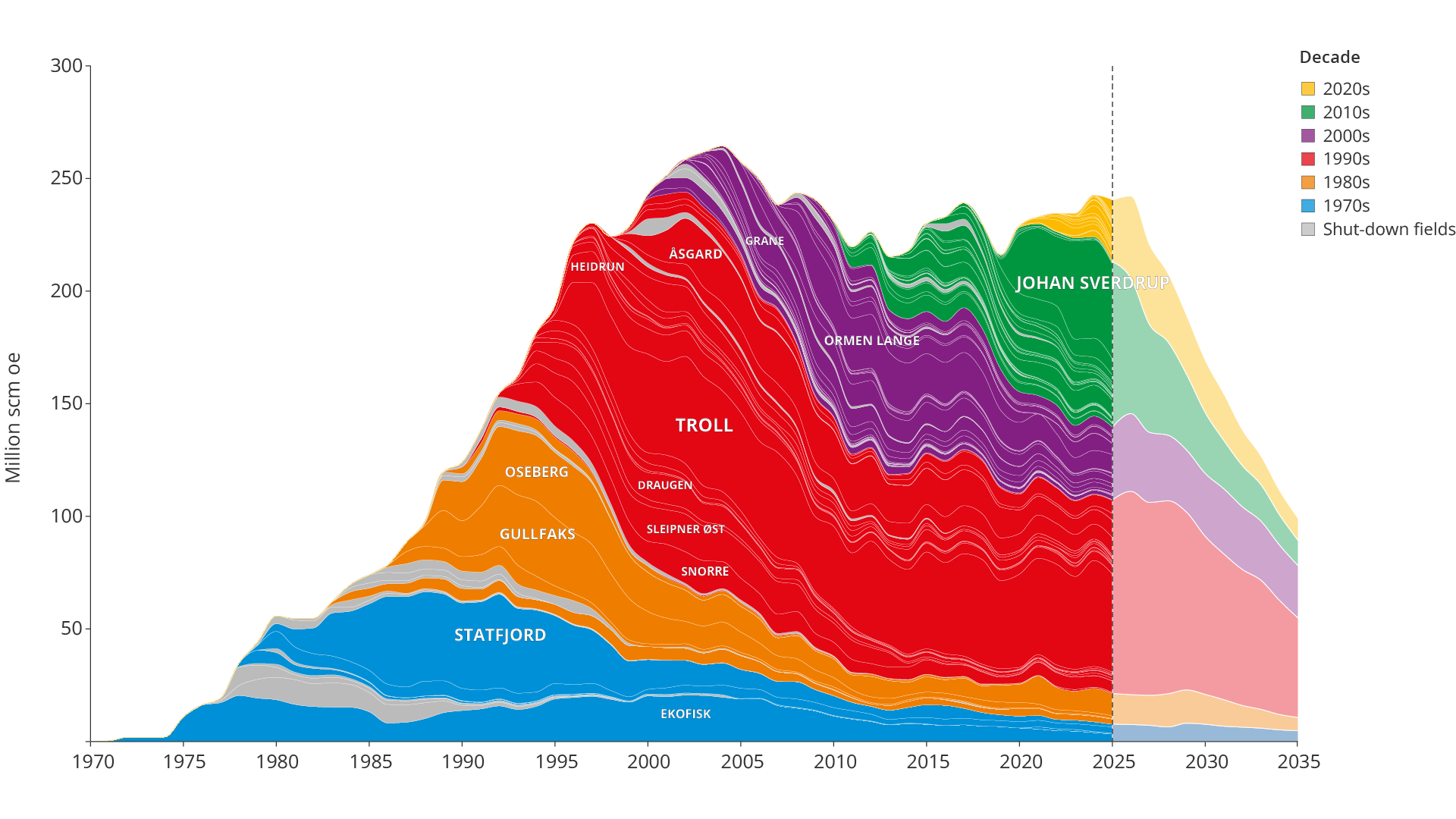
Historical production development and production forecast.
Oil and gas up to 2050
The Norwegian Offshore Directorate has prepared three feasibility scenarios for the total production of oil and gas up to 2050. All three scenarios depict a decline in production, but how quickly this happens depends on exploration activity, willingness to invest and technology development, inter alia.
The scenarios depict a wide range of opportunities for developments in production up to 2050. In High, robust exploration activity, more discoveries and rapid technology development help to maintain a high production level, at approximately 65 per cent of today's level in 2050. In Low, a reduced willingness to invest and limited exploration activity result in a rapid downsizing of operations, with production dwindling to approximately 5 per cent of today's level in 2050.
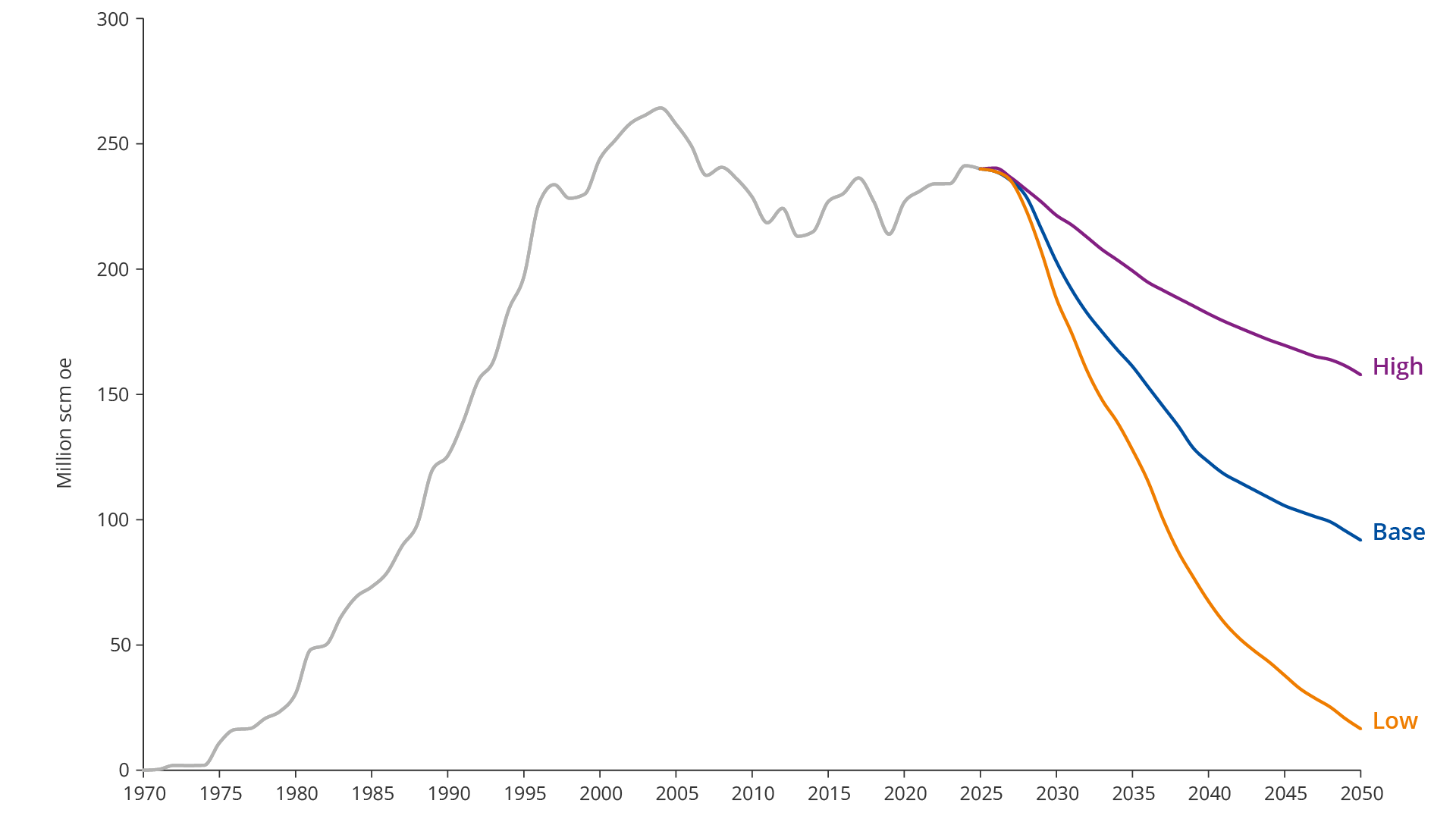
Three feasibility scenarios for petroleum production on the Norwegian continental shelf up to 2050.
The difference in net present value between the High and Low scenarios is estimated at approximately NOK 3 200 billion based on the same oil and gas price. Based on a high price in High and a low price in Low, the corresponding difference is NOK 8 300 billion.
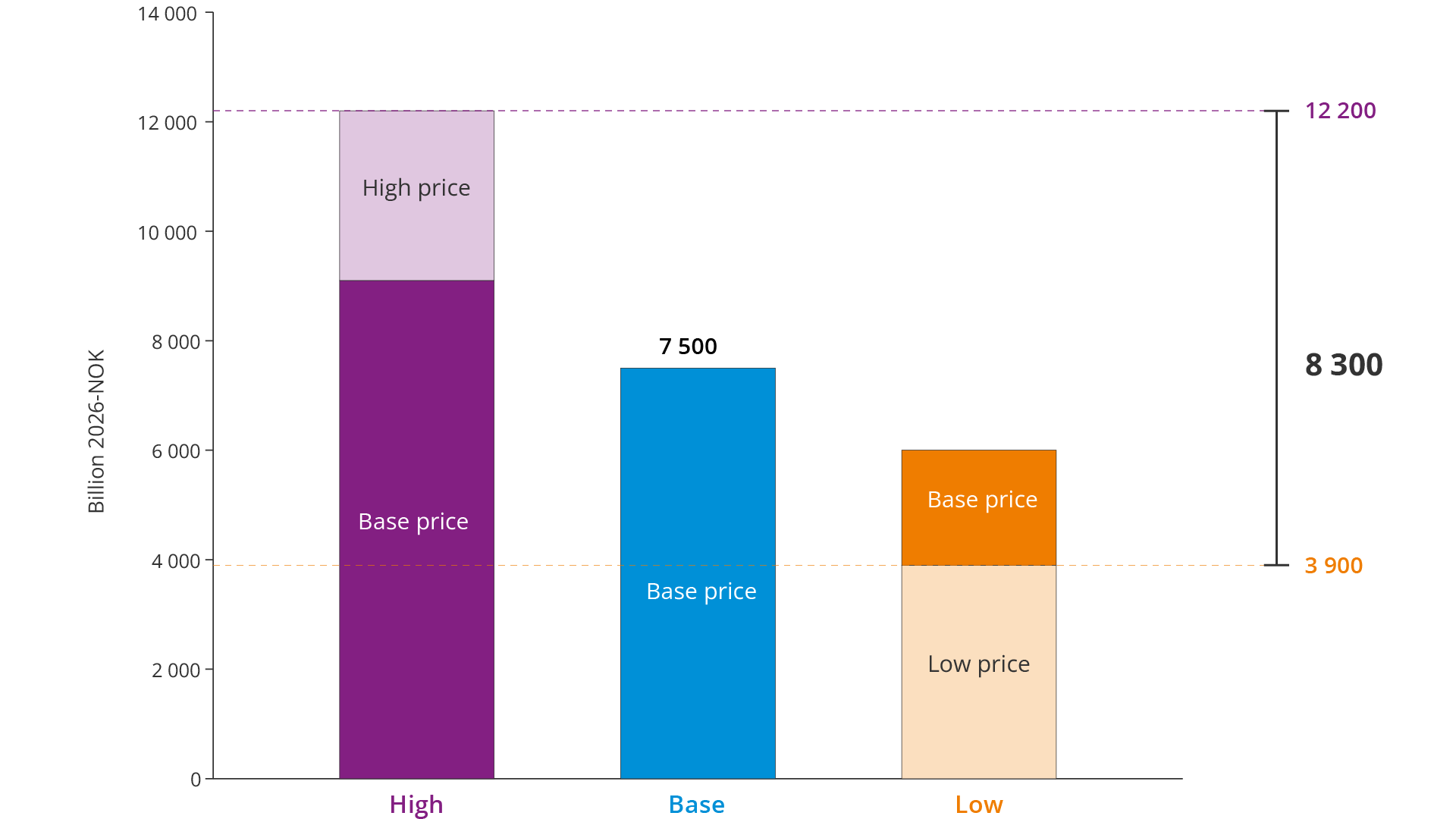
Technical estimates of net present value.
Plenty left to discover
To secure sufficient resources to maintain activity and production over time, more exploration is needed, both close to existing infrastructure and in less explored areas.
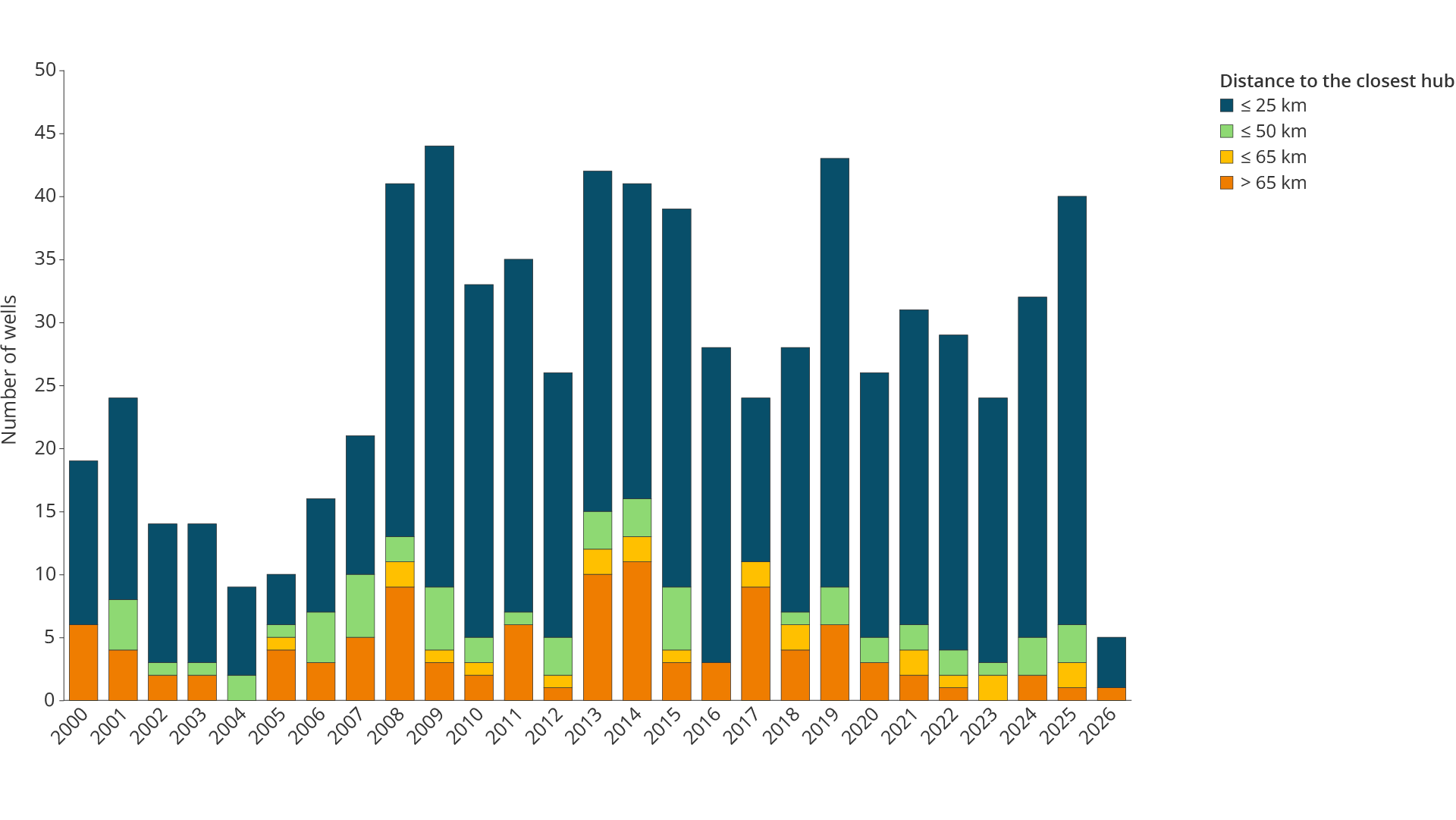
Development in the number of exploration wells by distance to the nearest hub.
Exploration close to fields yields good returns and many discoveries, but the discoveries are generally small and result in limited resource growth.
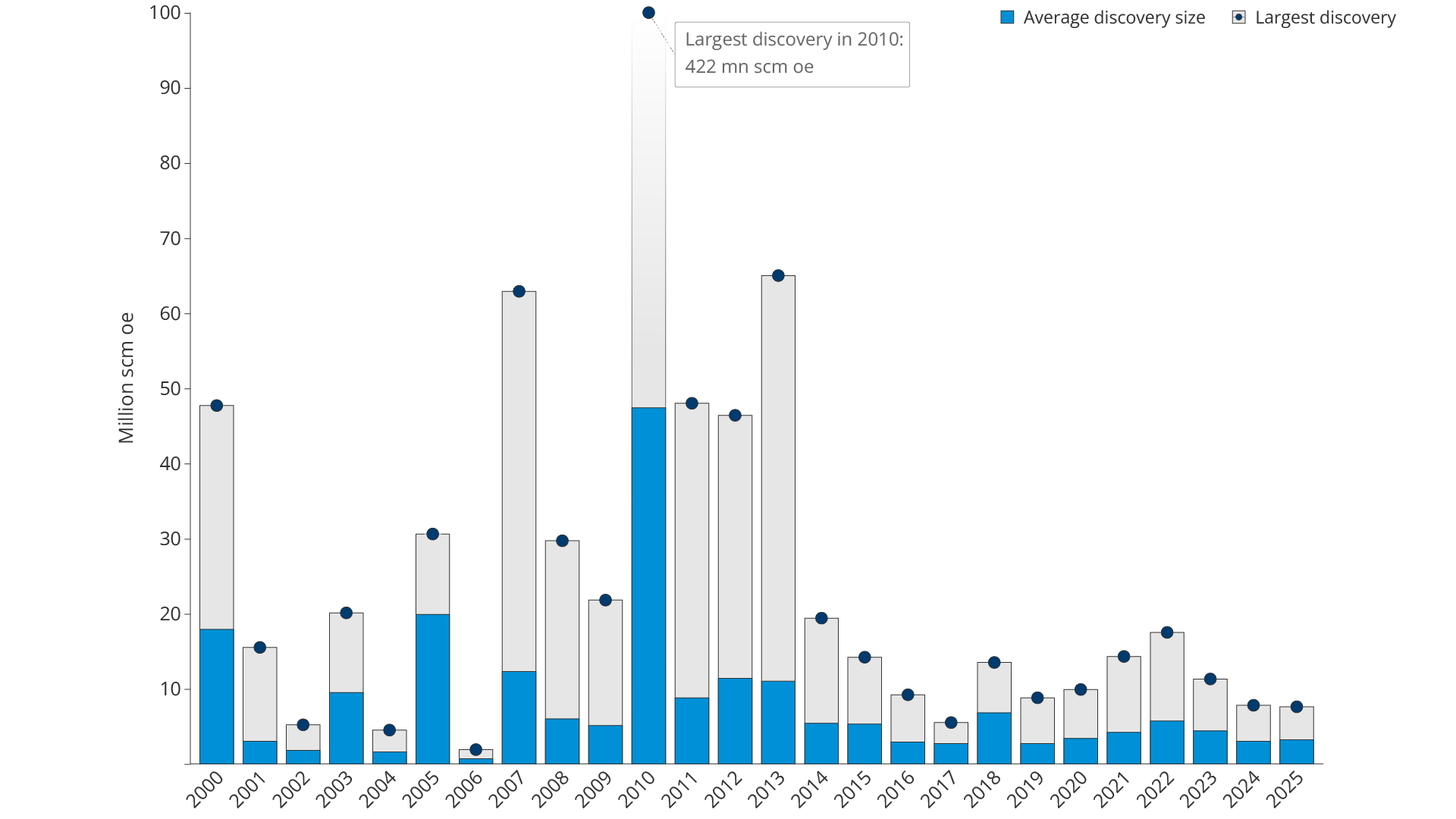
Average discovery size and largest discovery per year. Resource class 6 (RC 6) is not included.
More exploration is required in underexplored areas, where the potential for large discoveries is greatest to avoid a rapid decline in production.
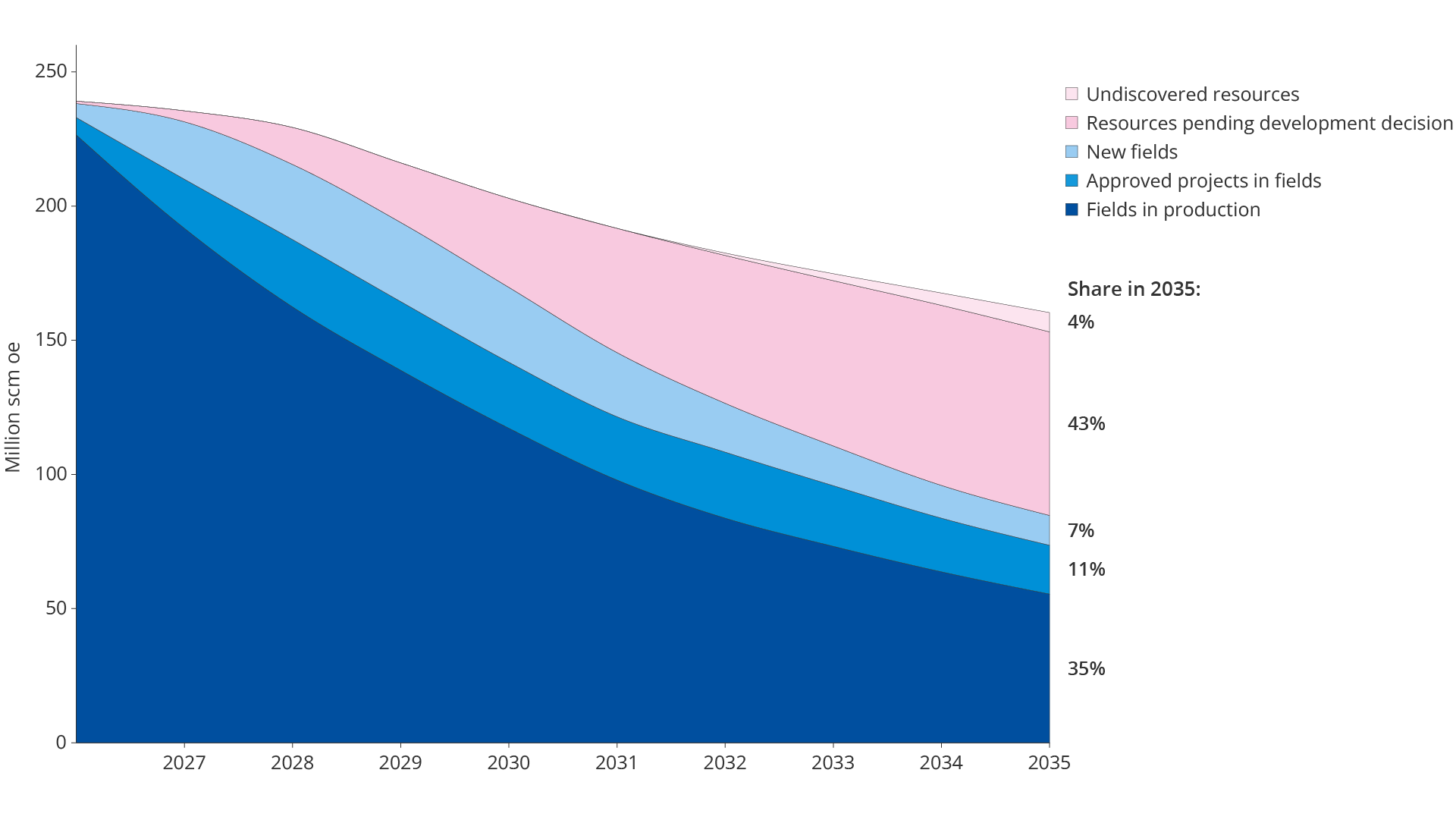
Production forecast by field, discovery and undiscovered resources in the period 2026–2035.
Profitable exploration
The Norwegian Offshore Directorate has analysed exploration in the period 2000–2025. The analysis shows that oil and gas exploration on the NCS has been extremely profitable. Of approximately 730 exploration wells drilled during the period, 370 yielded discoveries. The net present value from exploration is estimated at close to NOK 4,000 billion. Every krone invested in exploration has returned around NOK 4. Exploration is profitable in all sea areas on the shelf.
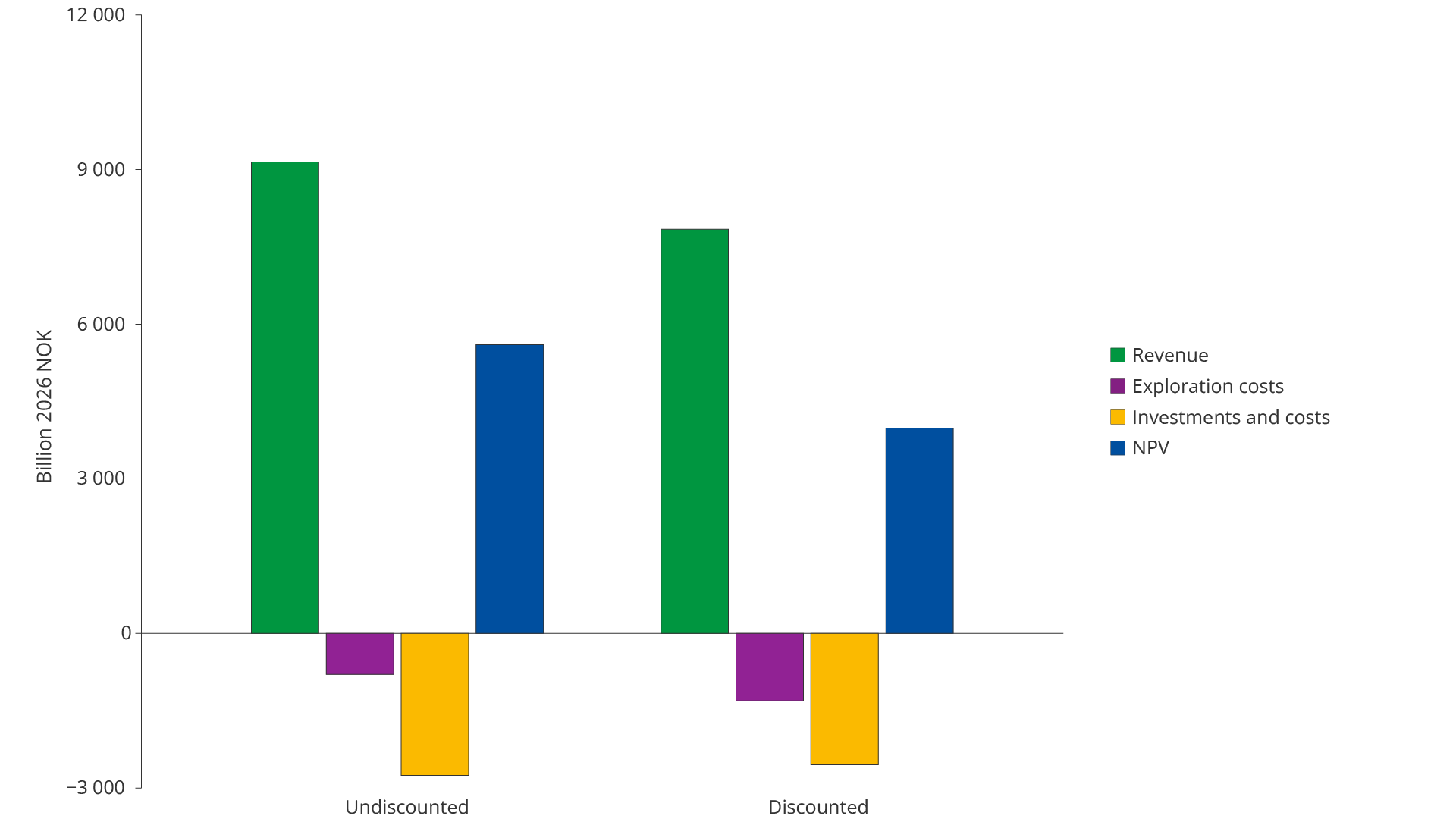
Net present value with revenues and costs related to exploration activities in the period 2000–2025.
Improved recovery from the fields
Whilst the NCS already has an average recovery rate of about 50 per cent, various measures can further extend the life of the fields and increase resource utilisation. In 2025, the companies submitted around 145 specific projects for improved recovery, corresponding to an estimated 280 million Sm³ of oil equivalent.
This includes the drilling of more production wells, low-pressure production, late-phase production, as well as injection and advanced methods.
The drilling of new production wells is the single most important measure. In 2025, more than 60 per cent of oil production came from wells drilled post-2020.
Advanced methods for improved recovery (EOGR) have great technical potential but are being downgraded by the industry due to technical uncertainty, strict profitability requirements and regulatory barriers. The window of opportunity to realize this potential is limited, and as the infrastructure is decommissioned, so too the opportunities disappear.
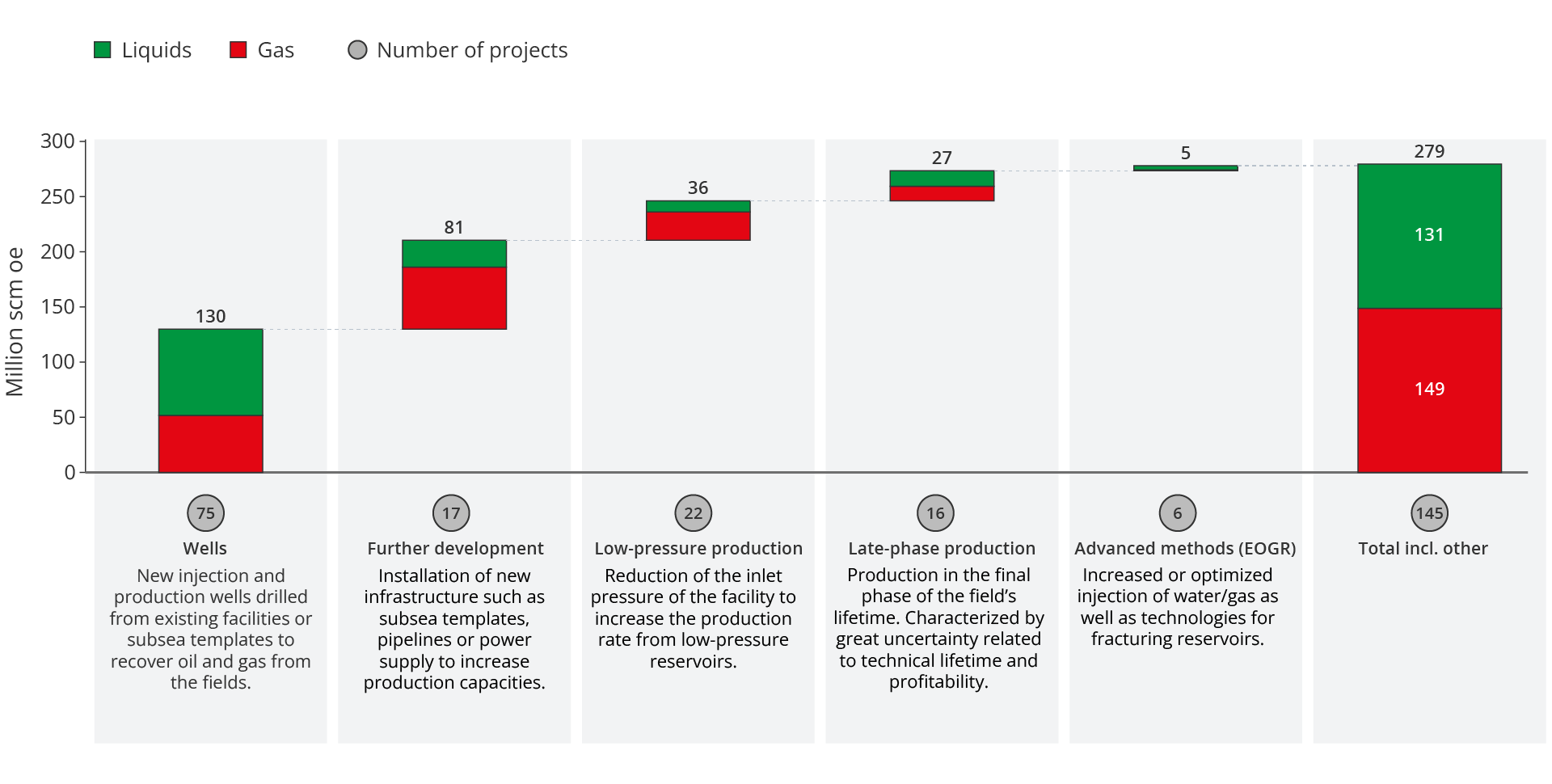
Specific measures awaiting development decision reported in 2025.
Oil fields with the largest remaining resources as of 31.12.2025.
Many discoveries have not yet been developed
The discovery portfolio on the NCS currently consists of over 90 discoveries with a total of over 500 million scm oe. in contingent resources. Most discoveries in the portfolio are small. To be developed they require access and tie-back to existing infrastructure with spare capacity.
This in turn requires collaboration and good area solutions.
The lead time from discovery to production start-up is currently long. The industry is working actively to reduce this time window as shorter lead times may allow more discoveries to be profitably developed.
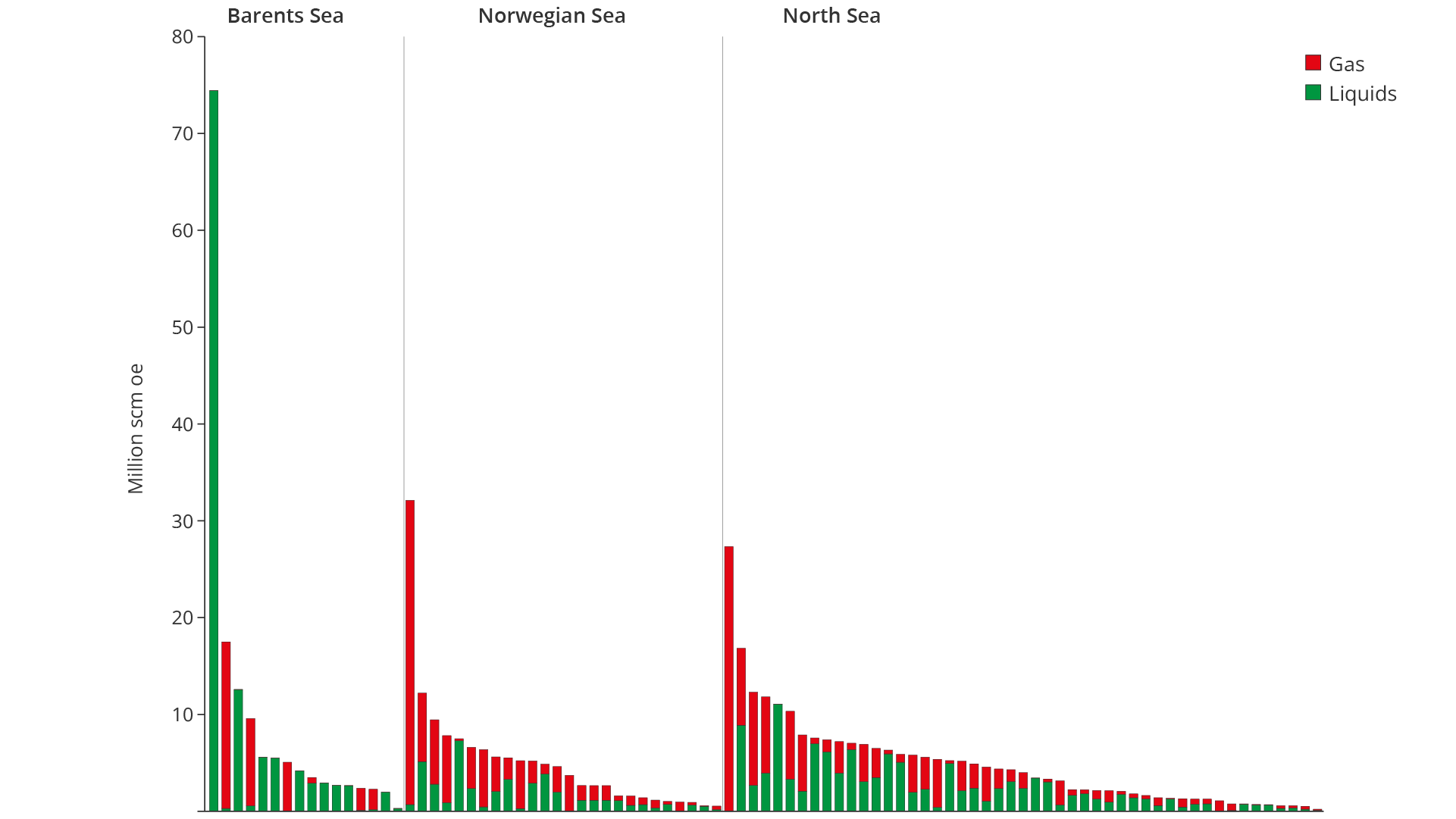
Discovery portfolio by sea area as of 31.12.2025.
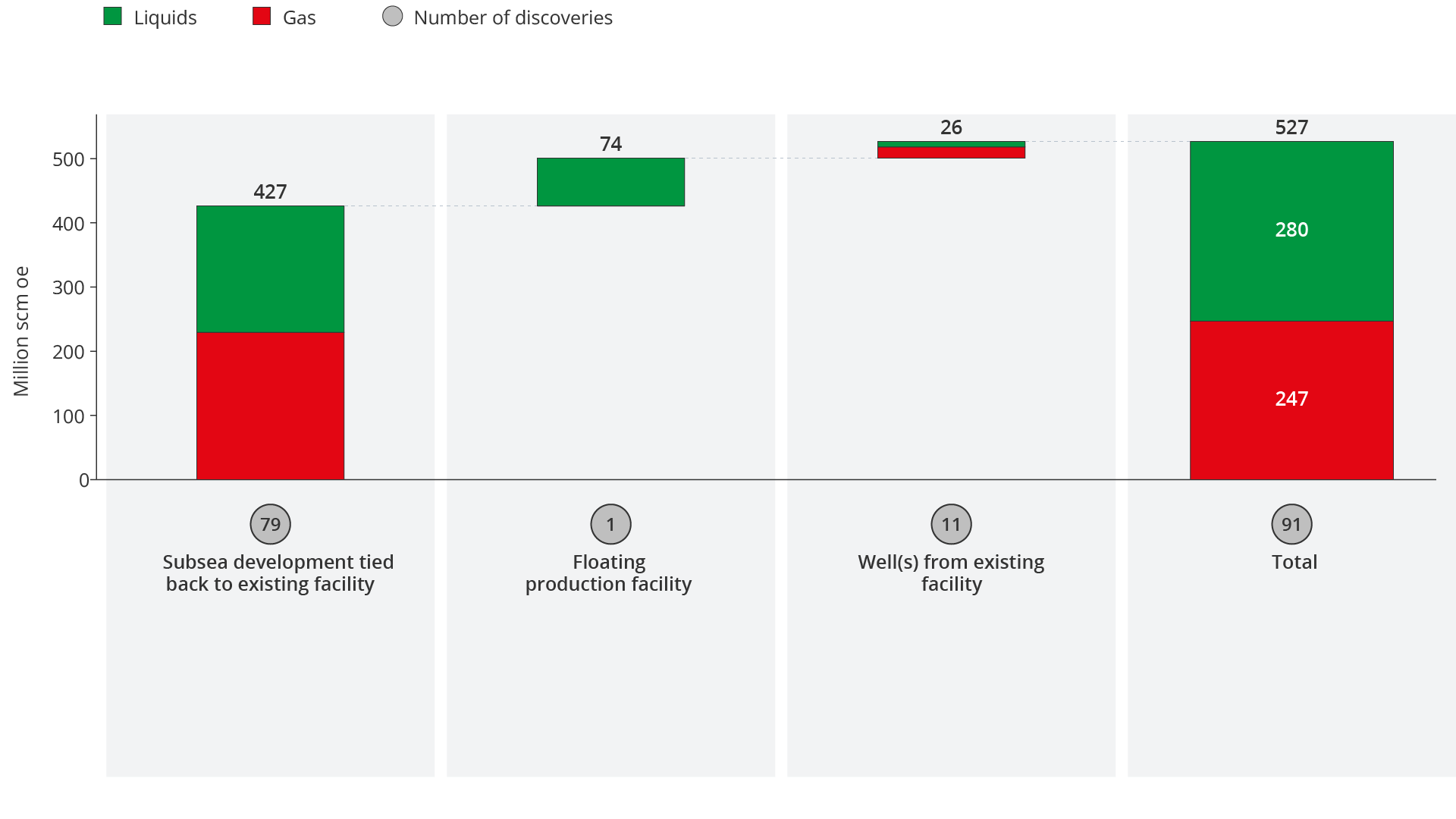
Field development concepts for discovered resources.
Everything is connected
Fields, discoveries and infrastructure are closely connected on the NCS. Pipelines, processing plants and terminals link resources to the market, and many small discoveries have only one possible access point.
When a field shuts down, the processing plant can lose so much oil and gas that further operation is no longer profitable. Thus, neighbouring fields and immature discoveries may lose their sole route to production. One shutdown can trigger a domino effect that accelerates the decline in production across entire areas.
Therefore, shutdown cannot be assessed based on one field's economy alone. Decisions regarding infrastructure determine which resources can be realised, and a failure to act comes at a price. Wait too long, and the opportunity will disappear.
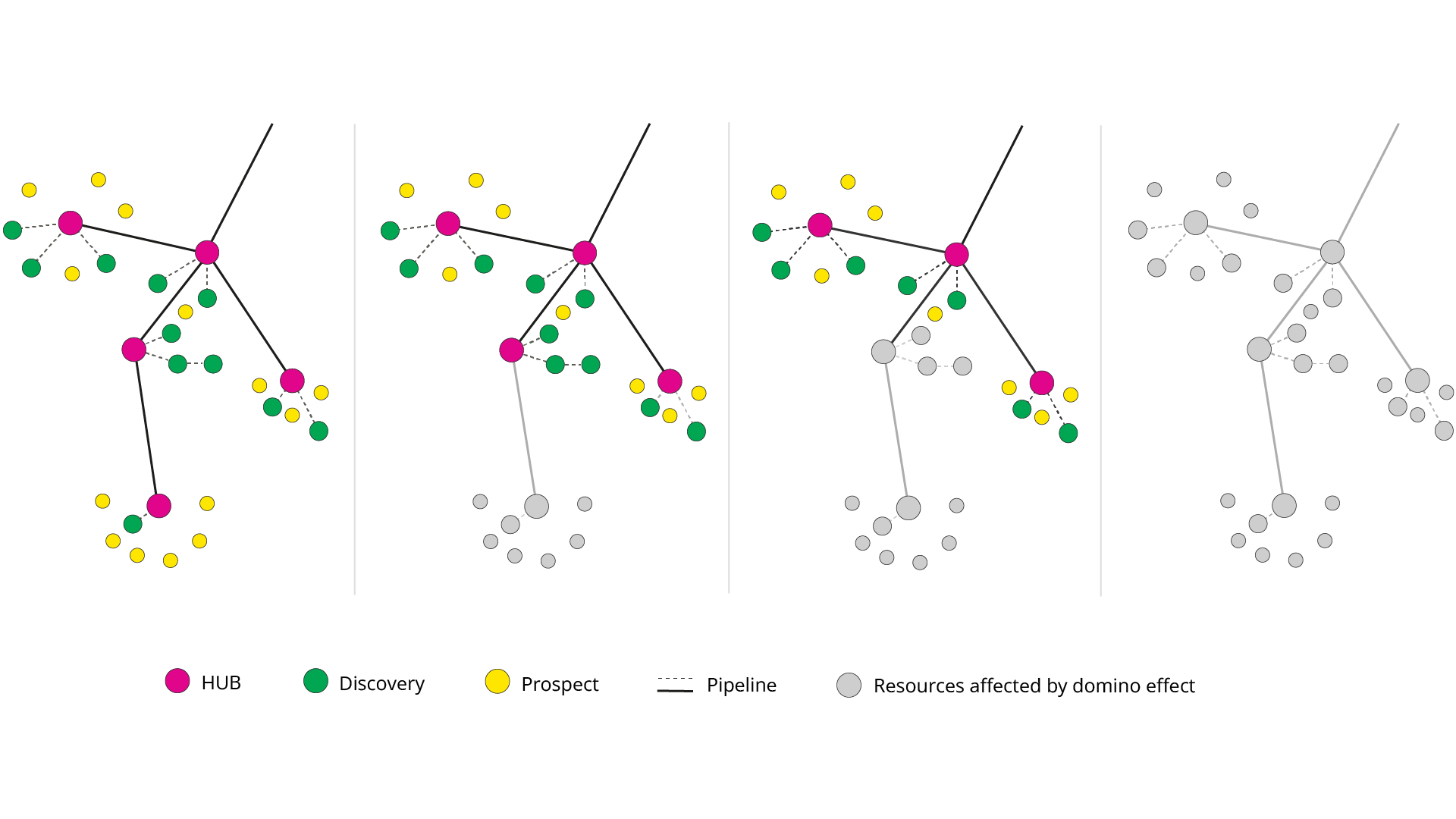
Mutual dependence and the domino effect.
Increased gas export capacity from the Barents Sea
The High North has the largest remaining resource potential on the NCS. Large areas of the Barents Sea are still underexplored, and significant areas have not been opened for petroleum activities.
Without increased gas export capacity, large portions of the resources in the Barents Sea may remain unexploited, and exploration will remain unattractive to the companies.
Hammerfest LNG at Melkøya is currently the only facility for gas export from the Barents Sea and is fully utilised by the Snøhvit field.
Increased gas export capacity can speed up production from existing fields and discoveries and pave the way for new discoveries up to 20-30 years earlier than with current capacity. This in turn may increase exploration in the least explored areas of the Barents Sea.
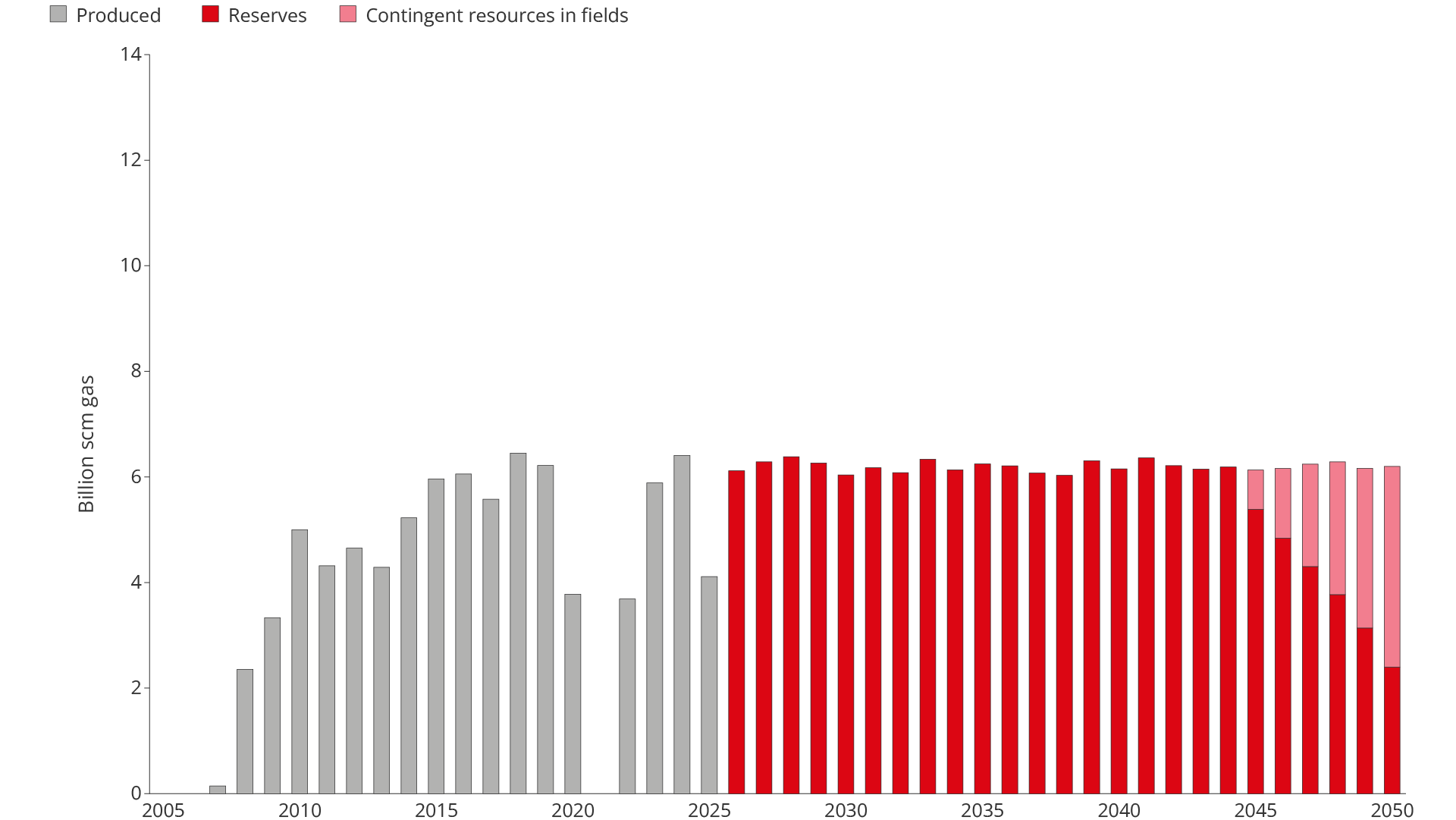
Potential trajectory for gas exports from the Barents Sea, based on today's export capacity.
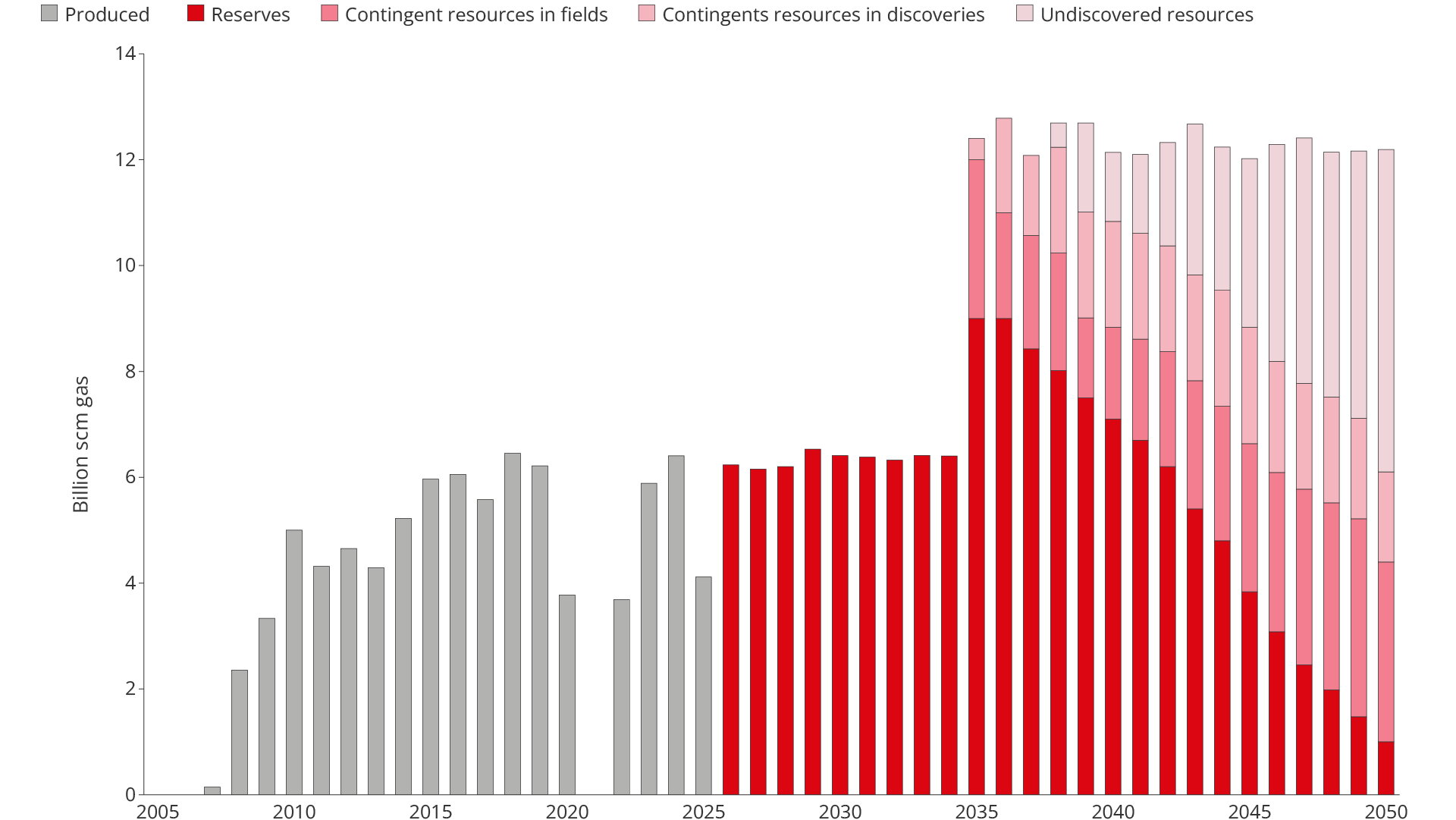
Potential trajectory for gas exports from the Barents Sea, exemplified by doubled export capacity.
A more concentrated industry player landscape
The number of companies on the NCS has more than halved since 2013. Large international companies have pulled out, and the development of new projects on the shelf is now largely dominated by Norwegian-based companies such as Equinor, Aker BP and Vår Energi.
A more concentrated industry player landscape can diminish both the geoscientific diversity of ideas and the competition for attractive acreage, which has historically been crucial for large discoveries.
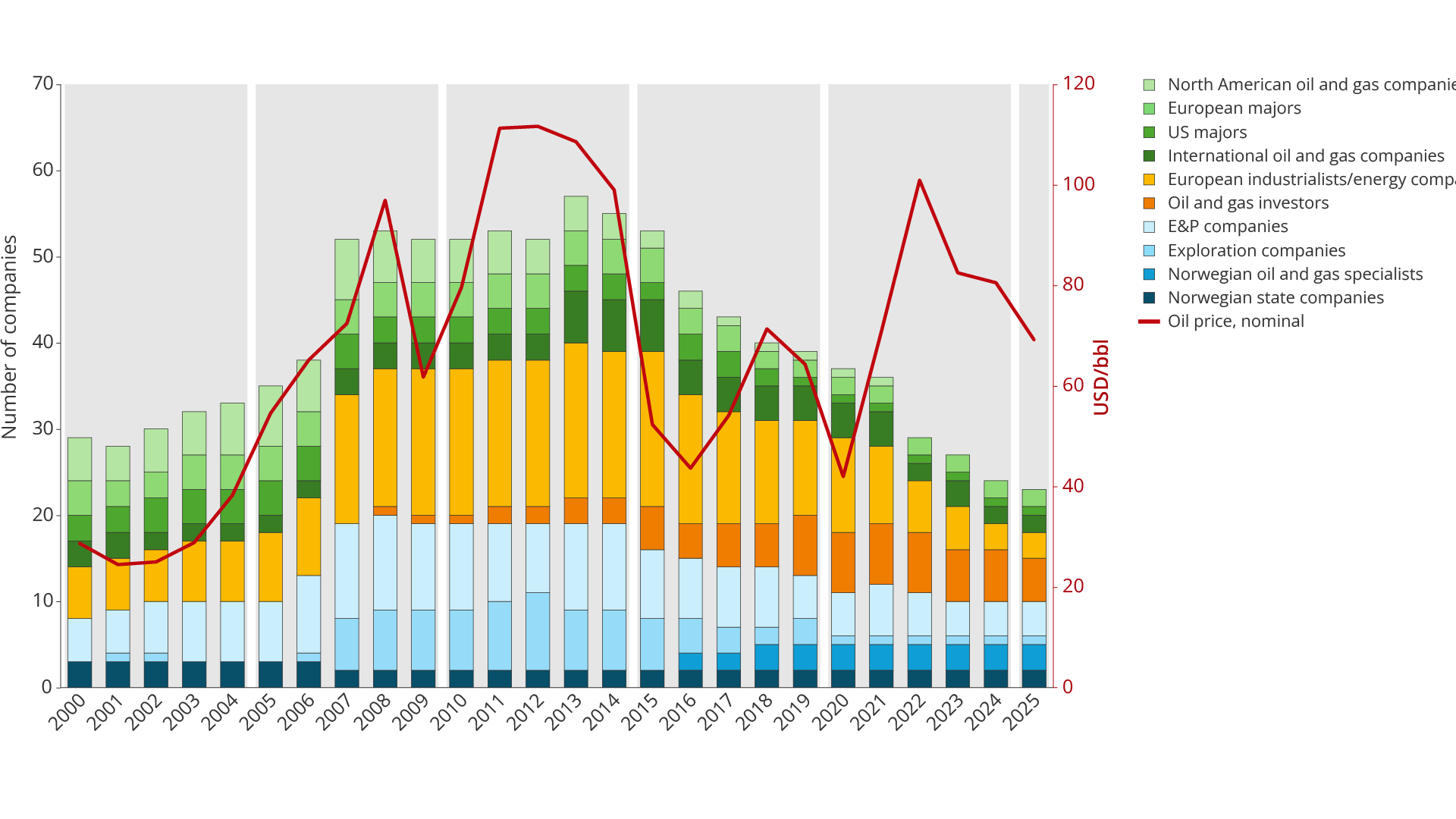
Development in the number of companies on the NCS by company category 2000–2025.
Technology and exploration determine how much we recover
The difference between a high and a low production trajectory up to 2050 is largely determined by technology and exploration. Rapid technological development is an important driver behind what distinguishes the High feasibility scenario from the rest.
Artificial intelligence and advanced seismics make exploration more accurate. Digital twins, remote control and unmanned facilities such as Munin make operations profitable at levels that were previously unachievable. New well technology can free resources in tight reservoirs and boost production from fields that would otherwise have been shut down with oil and gas remaining in the ground.
The same expertise is transferable to offshore wind, CO₂ storage and other industries. The value of maintaining and further developing this expertise therefore extends far beyond the petroleum industry.
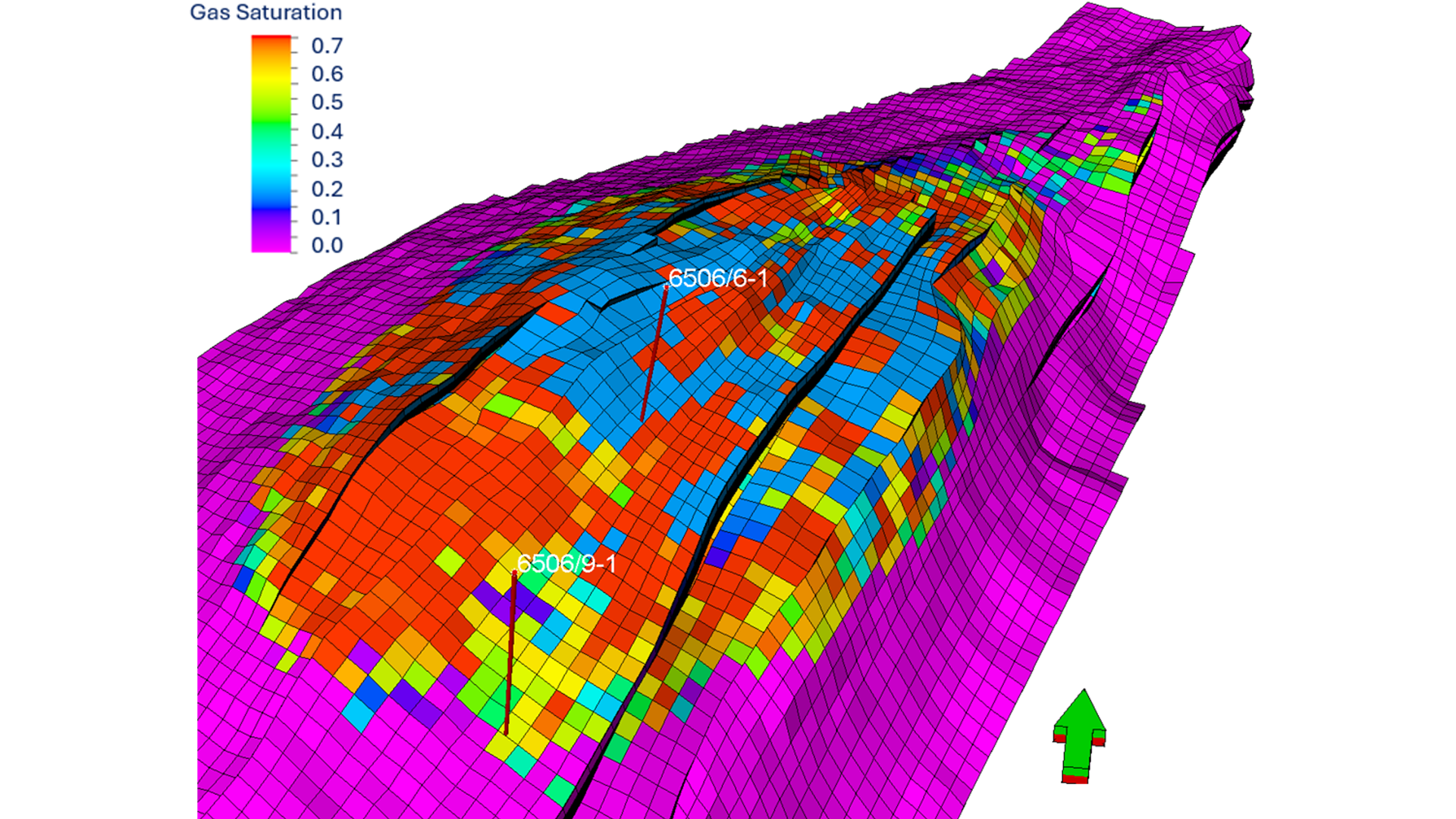
The figure shows a simulation model of the Victoria reservoir with large variations in gas saturation.
Ola Anders Skauby
Director of communication, security and emergency response
Tel: 905 98 519
John Gunnar Skien
Senior Advisor – Public and Media Relations
Tel: 909 98 144
Updated: 8/20/2026