
Norwegian Petroleum Directorate launches new system for reporting geophysical surveys
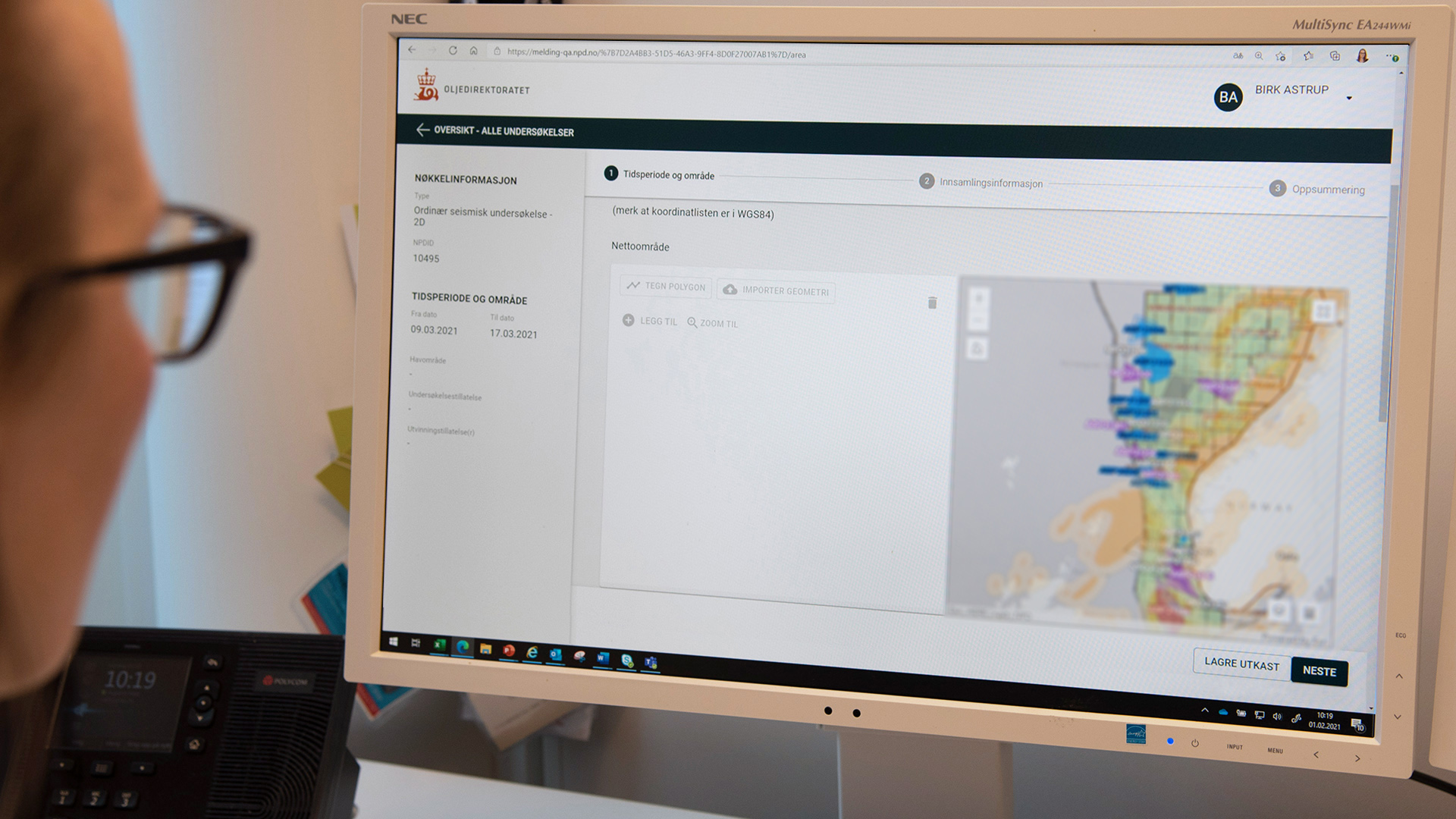
2/18/2021 The new system will streamline reporting of geophysical surveys. It will also contribute to better coexistence with fishery interests, and greater efficiency for the governmental agencies involved in the process.
The new reporting system (in Norwegian only) is largely a matter of improving maritime coexistence between fisheries and the oil industry. It will ensure that all players in the two industries have a complete overview of data acquisition, both planned and current, as well as which companies are involved. Users can follow case processing in real-time.
New and enhanced mapping technology makes it easier to visualise reported plans and to give good “snapshots” of the activity. At the same time, the system provides an overview of fisheries and spawning fields.
Streamlining and improvement
For quite some time, the NPD has provided a digital solution where the companies collecting geophysical data on the Norwegian shelf have reported their plans. However, it was a cumbersome system which did not accommodate newer digital technology.
All parties with permits for acquiring geophysical data on the Norwegian shelf must report their plans to the authorities at least five weeks before they plan to start the activity. Among other things, the companies must report when they plan to collect data, in which area, what type of survey (for example, seismic or electromagnetic surveys), and also specify what type of equipment they will use. Changes are often reported in the plans once they are under way.
Alongside the Norwegian Petroleum Directorate (NPD), both the Directorate of Fisheries (Fdir) and the Institute of Marine Research (HI) are consultation bodies in the work on geophysical surveys.
“We process around 500 reports and change reports every year. Since these reports have been processed manually until now, this has been time-consuming work with numerous letters, phone calls and a lot of email back and forth across the agencies,” says NPD Director technology and coexistence, Torgeir Stordal.
“That’s why the NPD launched the idea of making the process digital in 2017. After that, it didn’t take us long to start a pilot project to assess the benefits of creating a digital solution,” says Stordal.
Representatives for future users were consulted prior to development of the system and certain requirements were established for functional solutions based on user input. The NPD has collaborated closely with Fdir and HI to safeguard their needs in the process.
Digital milestone for the NPD
“The new system is important for the petroleum- and the fishing industry, but it also represents a digital milestone for us in the NPD,” says Director General Ingrid Sølvberg.
The reporting system is the first interactive solution developed for external users on the NPD’s new IT platform, and Library of the Norwegian Continental Shelf (Sokkelbiblioteket 2026).
“The project goes hand-in-hand with the Government’s digitalisation circular for public enterprises, where the stated goal is for users to experience their encounters with the public sector as cohesive and efficient, as a single, uniform public sector. The agencies must cooperate across all administrative levels and sectors in order to achieve this goal.”
“Now we have created a tool that can be used by three agencies, and which is tailormade to resolve many of the challenges we saw earlier in the work on coexistence between Norway’s two most important industries,” says the Director General.
The system
The new reporting system is a good tool for planning data acquisition activity on the NCS, and it helps ensure that the NPD can publish the best data possible about the activities.
It has become easier for companies planning geophysical data acquisition to schedule their surveys in a way that can be adapted to the fishery industry, as well as spawning and spawning migration.
The information can be found on npd.no. Users can log in securely via altinn.no
Director Communication, public affairs and emergency response
Updated: 2/18/2021