Renewed interest in exploring under the basalt
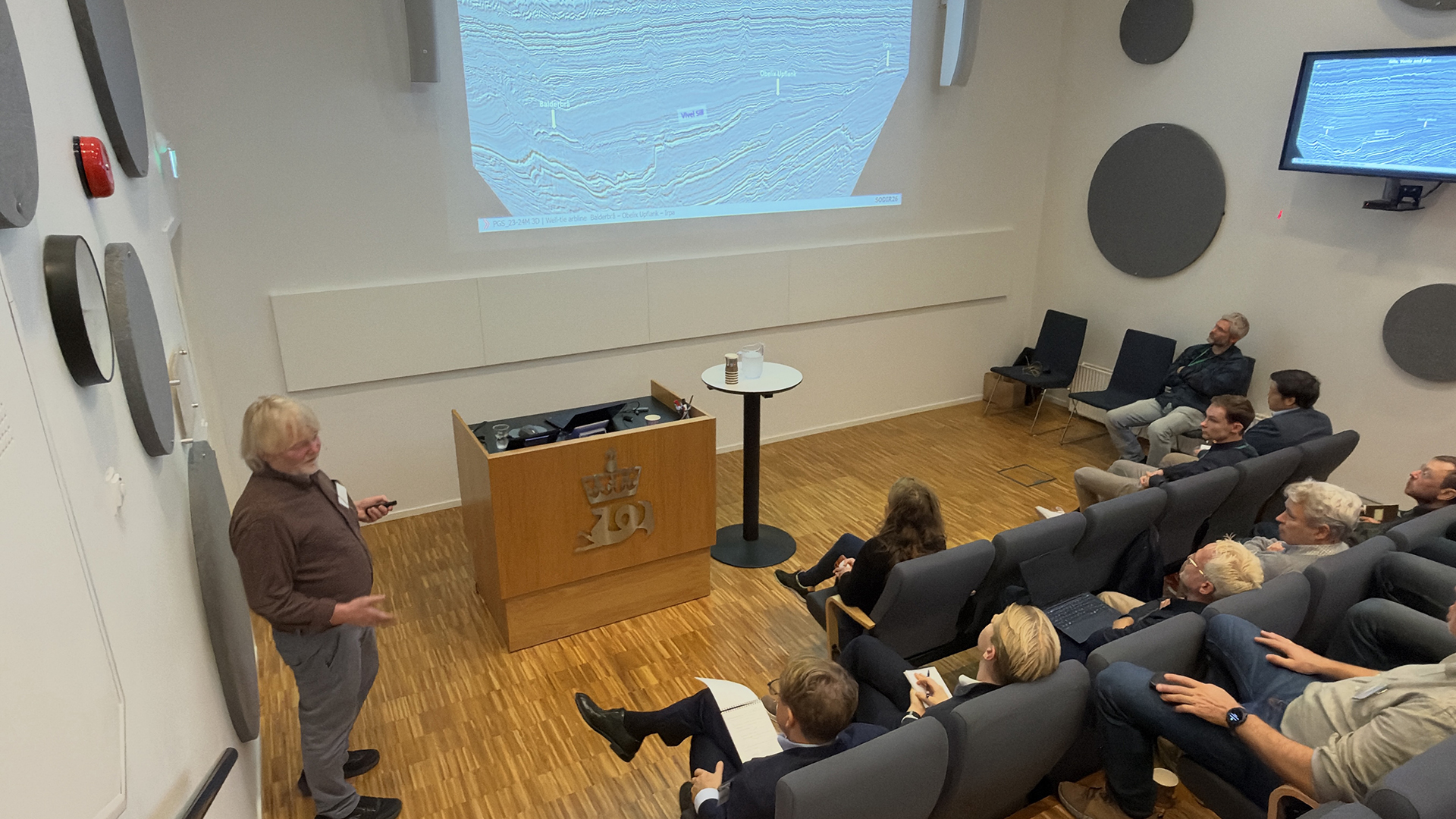
There is great interest in today's seminar sub-basic exploration. (Photo: Linn Smerud)
10/15/2026 Undiscovered oil and gas resources may be present under the volcanic rock basalt in the western part of the Norwegian Sea. However, no exploration wells have been drilled in these areas.
Could it be possible to explore for, and find, petroleum under the basalt on the Norwegian continental shelf (NCS)?
This is the general topic at the seminar organised by the Norwegian Offshore Directorate in Stavanger today, 15 October. There was considerable interest in the seminar, which was fully booked in short order.
Basalt disrupts seismic
“It’s uplifting to see the companies’ interest in sub-basalt exploration. The areas we’re talking about are among the least explored on the NCS, and there could be significant undiscovered resources there,” says Vaka Antonsdottir, Assistant Director for Exploration at the Norwegian Offshore Directorate.
The sub-basalt areas in the western part of the Vøring and Møre Basins were opened for petroleum activity as early as in 1994. However, to date, only a handful of production licences have had exploration targets under the basalt layers. No exploration wells have been drilled in these areas.
Facts about the basalt areas on the NCS
- Basalt is a dark, fine-grained igneous rock formed when thin lava cools down rapidly on the earth’s surface. Source: SNL (Norwegian encyclopaedia)
- On the Norwegian continental shelf (NCS), basalt can be found in areas that have been subjected to volcanism in connection with fracturing of the seabed during continental drift
- Why is basalt challenging?
Basaltic deposits disrupt seismic imaging and lead to loss of the sound wave energy that streams through the basalt (seismic attenuation) – which results in poor seismic resolution for structures under the basalt. - Why focus on this now?
Sub-basalt areas are one of the most underexplored areas on the NCS, where the potential could be significant undiscovered oil and gas resources. - Is this all in areas opened for petroleum activity?
For the most part, all the presumed prospective areas are in open acreage; however, not all the presumed prospective areas are within current APA acreage (see map) - How much is licensed?
As of now (October 2026), just one active production licence is focusing on volcanic-related prospectivity.
Basalt covers up the older deposits
Over the course of geological time, the sub-basalt areas have been influenced by several phases of rifting and eventually volcanism. This is due to the spreading of the Atlantic Ocean between Norway and Greenland, resulting in locally thick basalt sequences forming a cover over the older sedimentary deposits.
These types of geological conditions make it difficult to explore for prospective oil and gas areas in the subsurface.
“The basalts disrupt the seismic imaging of the underlying sedimentary deposits when conventional ‘streamer’ seismic is used”, Antonsdottir explains.
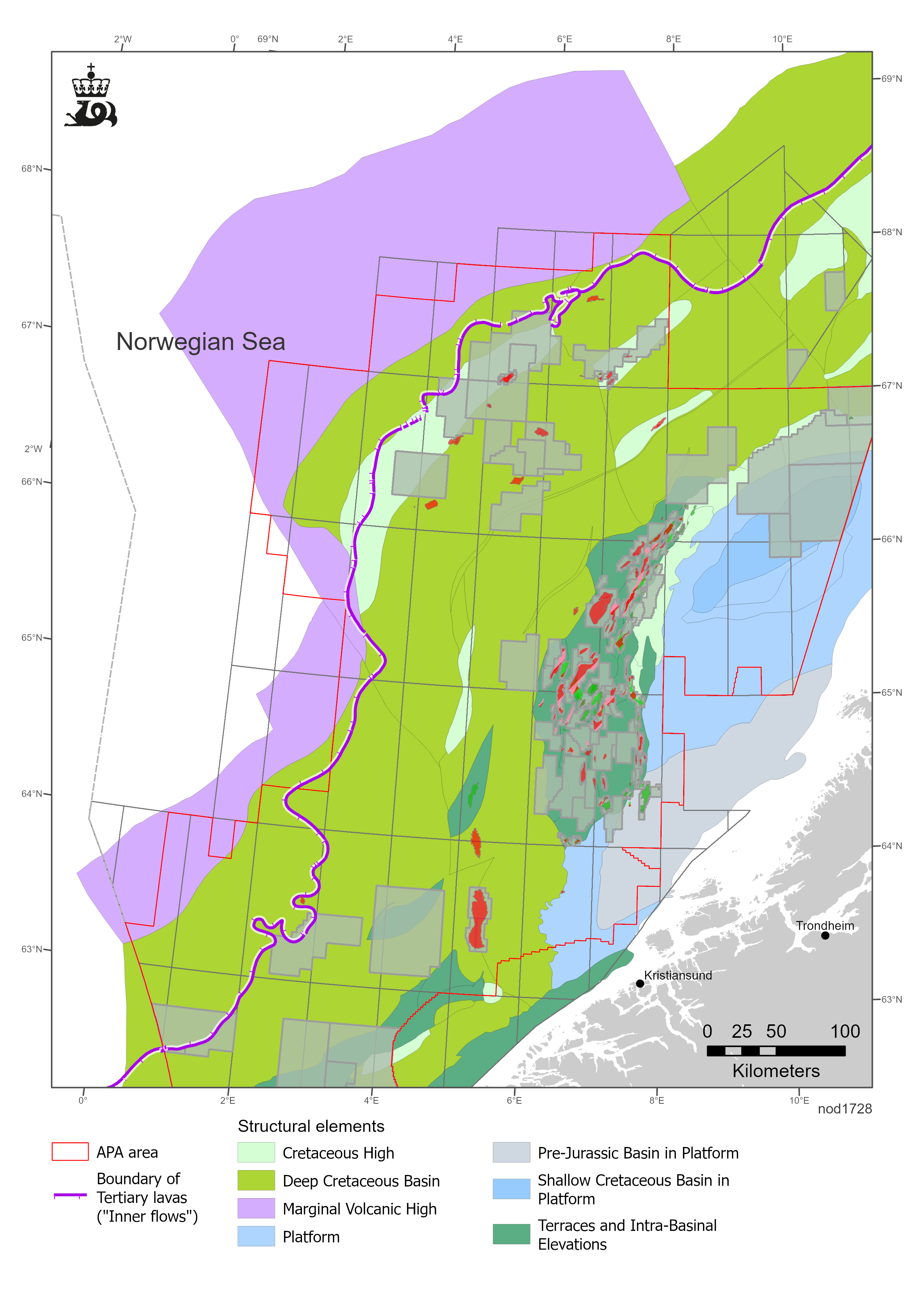
The sub-basalt areas extend from the Boundary of Tertiary lavas – the “Inner flows” boundary in the Vøring and Møre basins (purple line) to the marginal highs (Vøring and Møre Rand High) in the west.
Primary objective
The Norwegian Offshore Directorate's primary objective is to contribute toward generating the greatest possible values for Norwegian society from oil and gas activities on the Norwegian continental shelf (NCS) through efficient and prudent resource management, while also taking into account health, safety, the environment and other users of the sea. This is laid out in the allocation letter from the Ministry of Energy.
Today's program.
| Speaker | Title | Time |
| Vaka Antonsdottir, The Norwegian Offshore Directorate | Welcome | 09.00-09.05 |
| Daniel Høie, The Norwegian Offshore Directorate | Sub-basalt plays on the NCS | 09.05-09.15 |
| Sverre Planke, Volcanic Basin Energy Research (VBER) | Sub-basalt exploration opportunities of the mid-Norwegian margin assessed by integrated interpretation of high-quality seismic data, shallow boreholes, and analogues | 09.15-10.00 |
| Coffee break | 10.00-10.20 | |
| Nico Huebner, Harbour Energy | Sub-Basalt Exploration at the Vøring Marginal High | 10.20-10.45 |
| Jim Myrvang, Aker BP | Post-Basalt Prospectivity in PL 1308: Using OBN as a De-risking Tool | 10.45-11.10 |
| Lunch | 11.10-12.00 | |
| Martin Widmaier and Sören Naumann, TGS | From Challenge to Opportunity: Evolving Seismic Technologies for Exploration in Volcanic Basins | 12.00-12.30 |
| Daniel Baltar, EMGS | Imaging of basalt and sub-basalt sediments using CSEM and seismic integration in the Vøring Basin | 12.30-12.55 |
| Coffee break | 12.55-13.15 | |
| Bent Kjølhamar and Mikal Trulsvik, TGS | Prospective play models and new observations on sediment-volcanics interactions using elastic FWI in the Møre and Vøring basins | 13.15-13.40 |
| Jakob Skogseid and Øyvind Steen, Equinor | Outer Vøring Margin prospectivity revisited | 13.40-14.05 |
| Petter Dischington, The Norwegian Offshore Directorate | Wrap up and summary with open discussion | 14.05-15.00 |
Updated: 10/15/2026