Some of the wells that made a difference
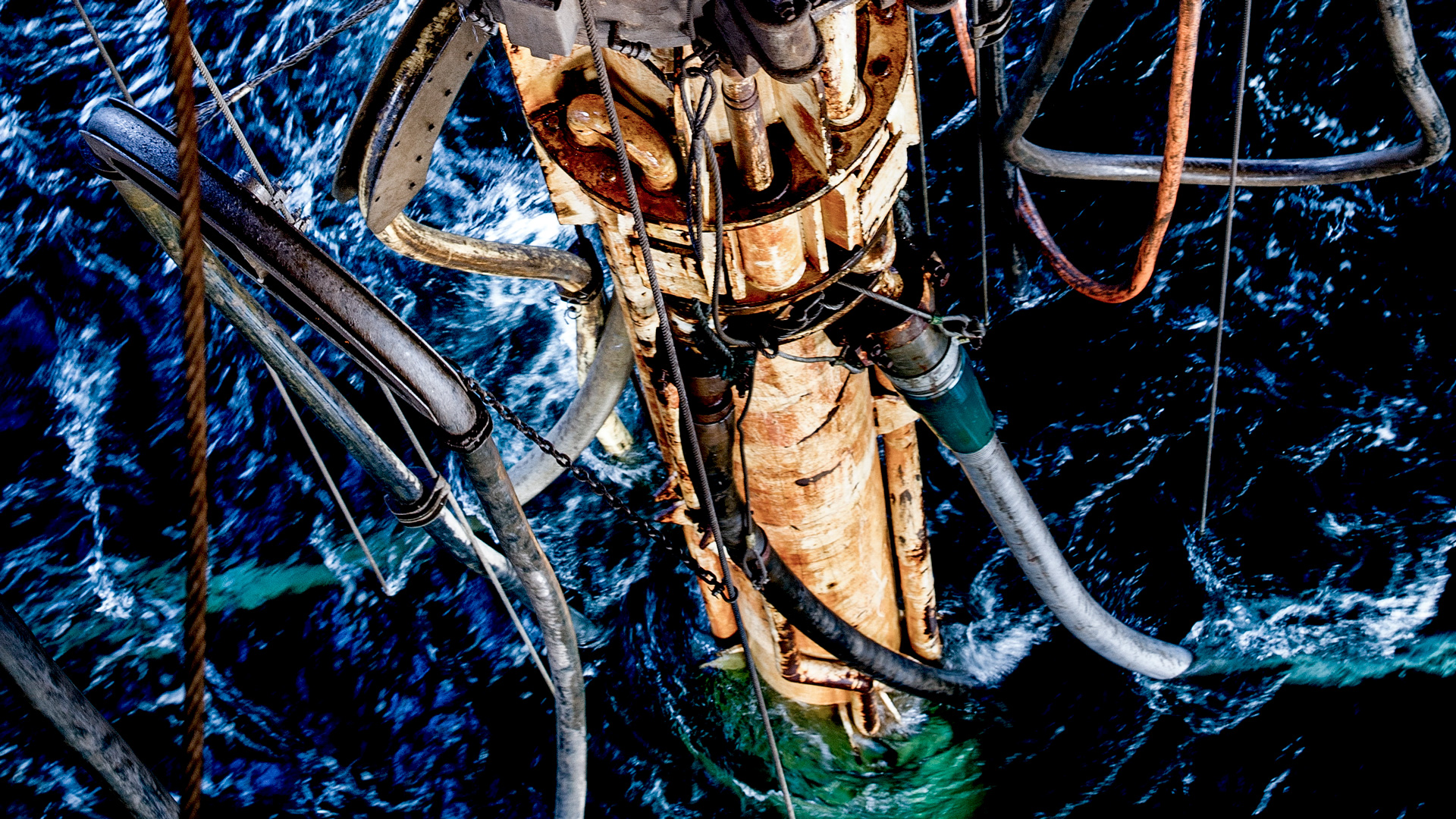
6/24/2026 All exploration wells are important and special, say the geologists. But some are more important and special than others.
This summer marks 60 years since the Ocean Traveler rig was towed 6000 nautical miles from the Gulf of Mexico to Stavanger – and eventually out into the North Sea to drill the first ever exploration well on the Norwegian continental shelf. The operator was Esso.
You can read more about this here.
Well 8/3-1 production licence 003 did not result in a commercial discovery, as it was technically dry. It was nevertheless significant in proving that it was indeed possible to drill on the Norwegian continental shelf, and the drilling hailed the introduction of a whole new field of expertise. In addition, laws, regulations and the role of the authorities were tested in practice.
Almost found Balder
After well 8/3-1 in was completed on 10 October 1966, Ocean Traveler moved on to block 25/11 in production licence 001, on the northern part of the Utsira High. Well 25/11-1 was spudded on 18 October and proved the first discovery of hydrocarbons on the Norwegian continental shelf in 1967.
The well was not production tested, but oil samples were taken from the reservoir. At the time, the data to hand was not sufficient to quantify the findings, but it would later transpire that this was quite a large discovery. It was eventually given the name Balder.
Esso also drilled its third well on the Utsira High, this time on the southern part. Well 16/2-1 found traces of hydrocarbons. The well is located midway between the currently producing fields Edvard Grieg and Johan Sverdrup.
Step by step
Since the summer of 1966, more than 1900 exploration wells have been drilled on the shelf. Almost 2/3 of these have been drilled in the North Sea. Step by step, areas have been opened for petroleum activities, licensed and explored.
In the pioneering phase, the technology was simple and untested, and was based on solutions from other locations, such as the Gulf of Mexico. As a result, it was not adapted to North Sea conditions with high waves, low temperatures and lengthy operations often characterised by high risk and high uncertainty.
The first exploration wells were drilled slowly with limited well control and a high risk of technical issues. Vertical wells were the standard.
Several types of wells
- On the Norwegian continental shelf, wells are mainly divided according to the purpose of the drilling.
- Exploration wells are either wildcats or appraisals.
- A wildcat well is drilled to prove whether there is petroleum in an area where no discovery has been previously made.
- An appraisal well is drilled after a discovery has been made, to gain more knowledge about the extent, size (volumes) and reservoir properties.
Find more, risk less
Technological development in exploration drilling has been largely driven by the need to make more discoveries whilst minimising risk.
For a start, geology has become more demanding. The large, straightforward discoveries were made early on. Today, exploration targets are often smaller and more complex, requiring more precise drilling, better well management, (control of pressure and flow in a well to avoid uncontrolled inflow of oil, gas or water from the reservoir), and more advanced measurements throughout the process.
An offshore exploration well is costly, and errors can have major financial repercussions. This has driven technology which increases accuracy, cuts drilling time and limits the risk of unforeseen incidents.
Strict requirements on the Norwegian continental shelf have led to the development of better well control, safer barriers and more automated operations, all of which reduce risk to humans and to the environment.
New requirements have also been imposed due to environmental and climate considerations. Technology must enable fewer "unnecessary" wells, less intervention and better decisions before and during drilling.
Digitalisation and data access have fundamentally changed exploration drilling. Real-time data, modelling and advanced analysis are facilitating ever smarter, safer and more targeted drilling.
Some noteworthy wells
The first well
- This summer marks 60 years since the Ocean Traveler rig drilled the first wildcat well on the Norwegian continental shelf.
- Although the well was dry, it was in many ways the first decisive step into the petroleum era.
- Approximately one fifth of the economic value added to the Norwegian economy comes directly from oil and gas activities.
- More than 200 000 people are directly or indirectly employed in the petroleum industry. This corresponds to approximately 10 per cent of private sector employment in Norway.
- To slow down the decline in production, it is important that the companies continue to explore, both close to existing infrastructure and in underexplored areas.
Map: Jan Allan Eide/Norwegian Offshore Directorate
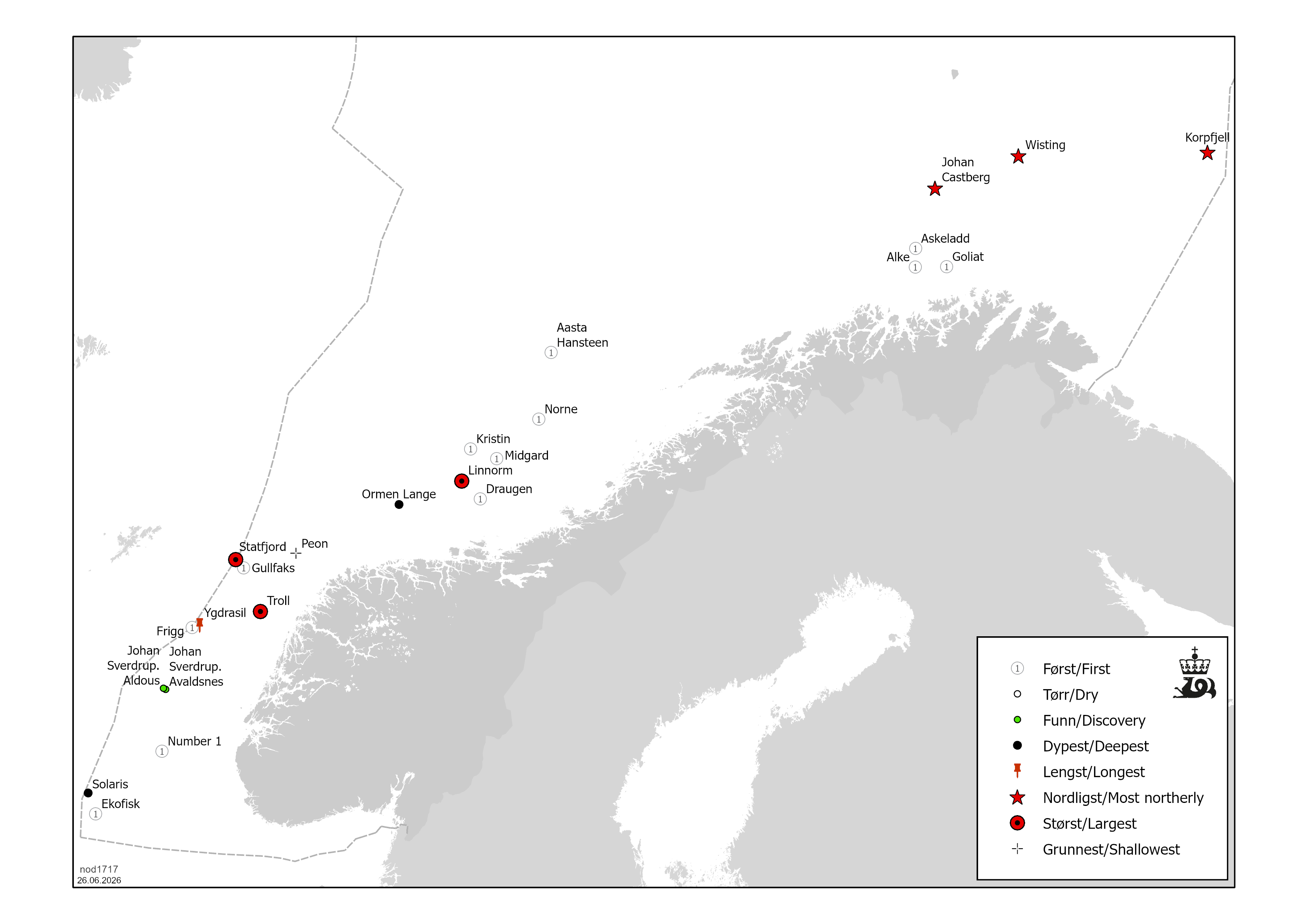
All exploration wells are important, even the dry ones, because they contribute to greater knowledge and understanding of the subsurface. There follows an overview of wells which have something special about them. The list is by no means exhaustive.
North Sea
8/3-1 (production licence 003). Operator: Esso. Year: 1966
This is the very first exploration well drilled on the Norwegian continental shelf. The well was dry.
2/4-2 (production licence 018). Operator: ConocoPhillips, then Phillips Petroleum Company. Year: 1969
This is the discovery well on Ekofisk, the first major commercial oil and gas discovery on the Norwegian continental shelf. Oil production started in 1971 – and the field is still in operation.
25/1-1 (original production licence: 024). Operator: Elf Petroleum (Elf Aquitaine). Year: 1971
This is the discovery well on Frigg. The well proved the first "clean" gas discovery on the Norwegian continental shelf. Frigg was also the first cross-border discovery to be developed. The field is located on the dividing line between Norway and the UK, with approximately 60 per cent of the resources on the Norwegian side. The field was shut down in 2004.
33/12-1 (production licence 037). Operator: Mobil (now Equinor). Year: 1974
This is the well that proved the largest oil field on the Norwegian continental shelf. Statfjord's resources are estimated at around 860 million standard cubic metres (Sm³) of oil and 154 billion Sm³ of gas, of which approximately 580 million Sm³ of oil and 88 billion Sm³ of gas are expected to be recoverable.
34/10-1 (production licence 050). Operator: Statoil (Equinor). Year: 1978
This is the discovery well on Gullfaks (1978), the first major "Norwegian" discovery. When the production licence was awarded in 1978, it went to a Norwegian trio – Statoil (operator), Norsk Hydro and Saga Petroleum. This was important politically, because it illustrated a conscious choice to build the Norwegian oil industry.
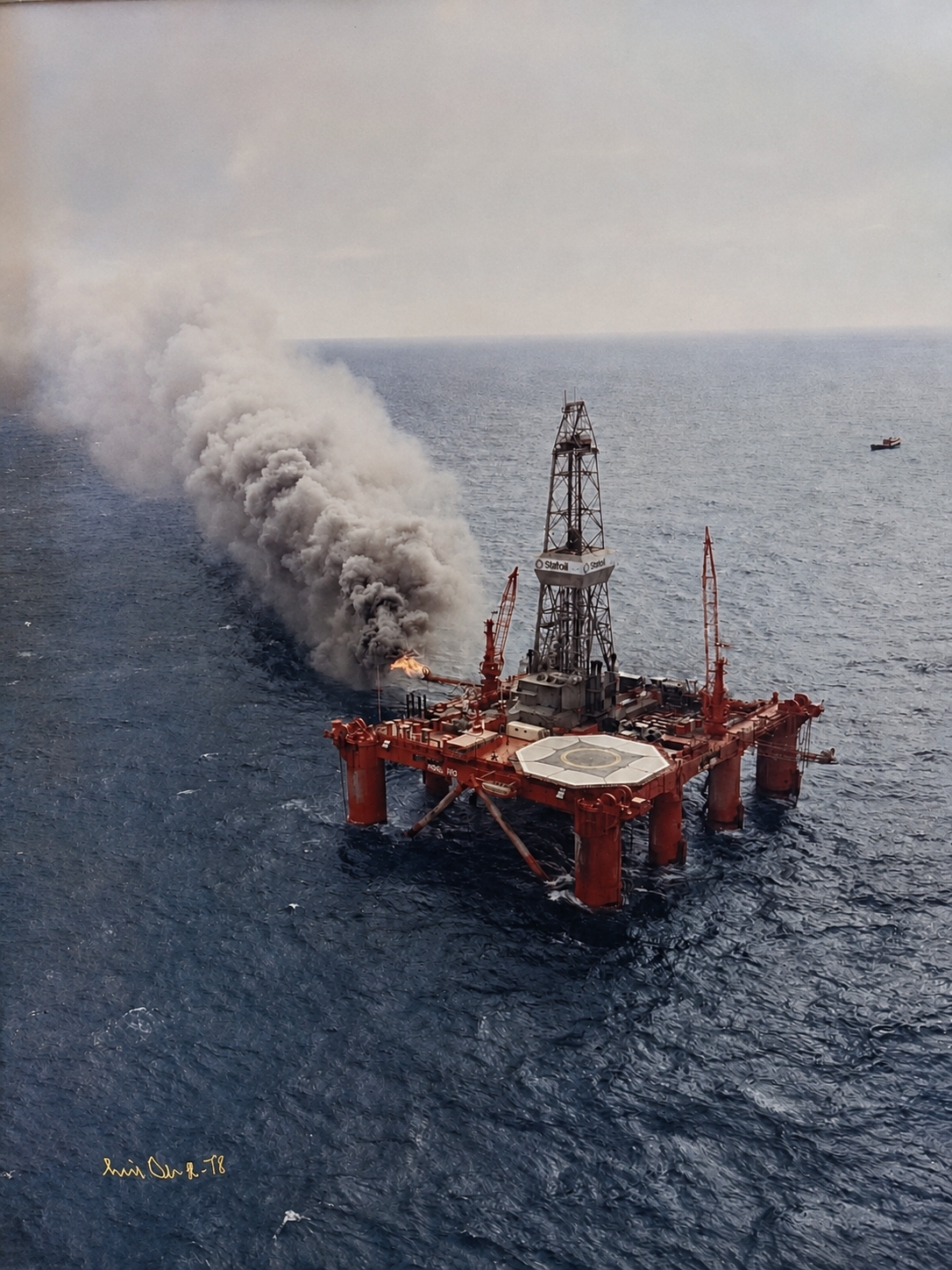
Ross Rig production tests the discovery well at Gullfaks in 1978. At the time, a well was put on stream using a temporary production facility on the exploration rig. To dispose of the oil and gas, it was flared. Today, it is relatively rare to production test exploration wells in this way. Photo: Leif Berge/Equinor
31/2-1 (production licence 054). Operator: Statoil (Equinor). Year: 1979
This is the discovery well on Troll, the largest gas field on the Norwegian continental shelf and one of the largest gas fields in the world. According to Equinor, the field contains 40 per cent of the gas reserves on the Norwegian continental shelf.
35/2-1 (production licence 318). Operator: Statoil (Equinor). Year: 2005
This is the discovery well on the "Peon" prospect. "Peon" is special because it contains one of the shallowest commercially assessed reservoirs by far on the Norwegian continental shelf. Its peak is around 574 meters below sea level. Most of the petroleum reservoirs on the shelf lie between 1500 and 4000 metres below sea level. This gas discovery has not been developed.
16/2-6 (production licence 501). Operator: Lundin. Year: 2010 and
16/2-8 (production licence 265). Operator: Statoil (now Equinor). Year: 2011
These two wells (on the "Avaldsnes" and "Aldous" prospects) proved what is now the Johan Sverdrup oil field. It is among the largest fields on the Norwegian continental shelf. Sverdrup was not the first discovery on the Utsira High, but it was the discovery that definitively proved large resources in this area.
1/5-5 (production licence 618). Operator: Total. Year: 2016
This well, referred to as "Solaris", is considered the deepest exploration well on the Norwegian continental shelf. Total vertical depth is 5941 metres below sea level The well, which was drilled in the Greater Ekofisk Area in the southern North Sea, was dry.
25/1-14 C (production licence 873 B (Wellhead) and 1249 (drilling target)). Operator: Aker BP. Year: 2025
This wellbore in the Yggdrasil area is currently the longest exploration wellbore drilled on the Norwegian Continental Shelf. According to the operator, the measured depth is around 10,666 meters (length of well path). The vertical depth is only 1990 m so most of its length is due to horizontal drilling.
Norwegian Sea
6507/11-1 (production licence 128). Operator: Saga (now Equinor). Year: 1981
This exploration well proved "Midgard", - the first discovery made in this sea area. Midgard later became part of the Åsgard development (the other two accumulations in Åsgard are "Smørbukk" and "Smørbukk Sør").
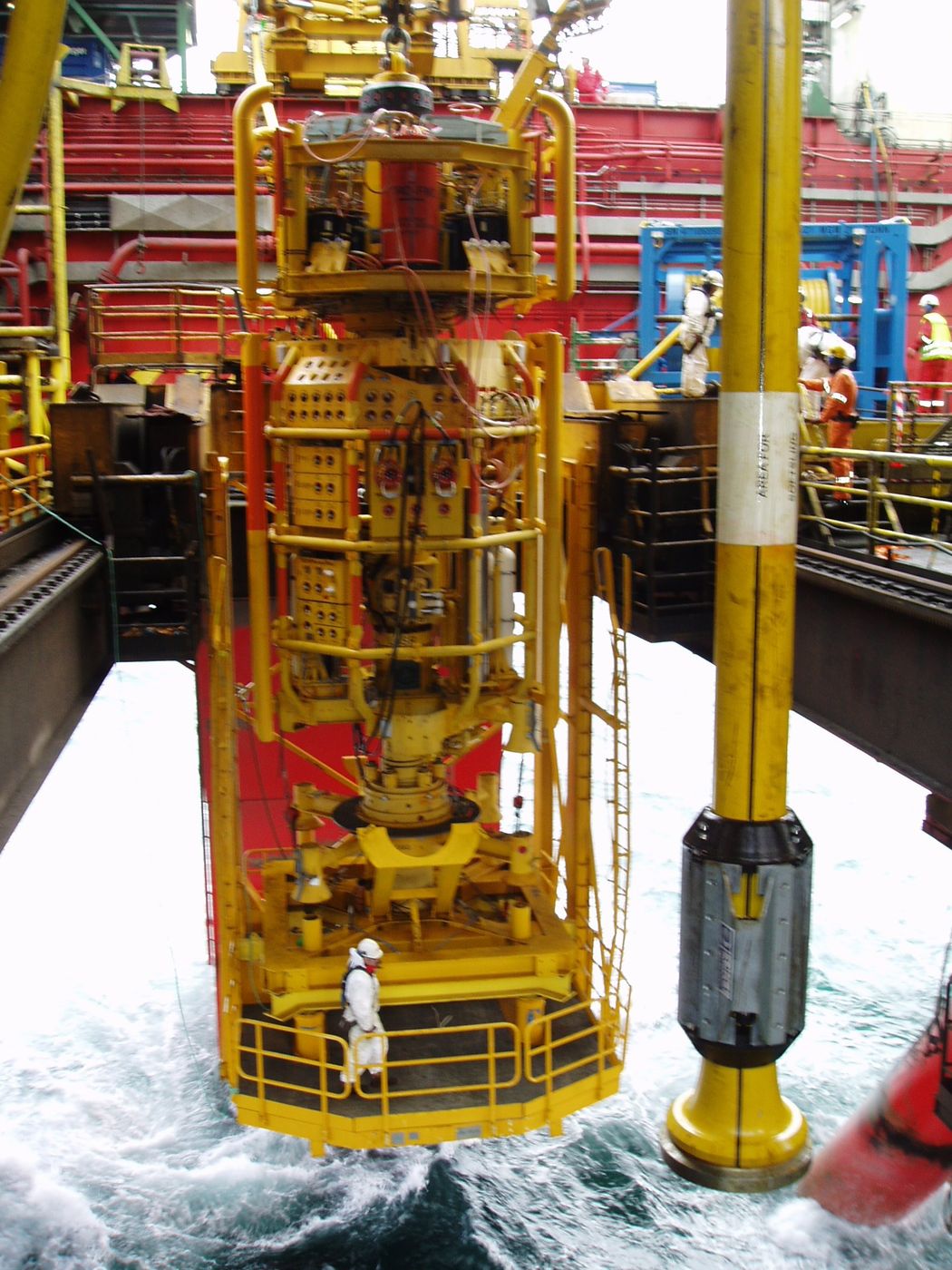
6407/9-1 (production licence 093). Operator: Norske Shell (OKEA since 2018). Year: 1984
This is the Draugen discovery well, the first discovery to be developed and put on stream in the Norwegian Sea. This well marked the start of oil and gas activities north of the 62nd parallel.
6608/10-2 (production licence 128). Operator: Statoil (Equinor). Year: 1992
The discovery well on Norne was significant because it was the first to be drilled in relatively shallow water in the Norwegian Sea. The discovery helped to open a new petroleum province in the north. Fun facts: Norne is the first field on the shelf to be developed using an FPSO (Floating Production, Storage and Offloading vessel), and the first field to be operated from Northern Norway (Harstad).
6406/2-3 (production licence 199). Operator: Saga (now Equinor). Year 1996
This is the discovery well on Kristin, and the first well to discover high-temperature gas under extremely high pressure (HTHP). The reservoir is located between 4600 and 5000 meters below the seabed. The deeper the reservoir, the greater the weight of the rocks above – and the higher the pressure and temperature.
6305/5-1 (production licence 209). Operator: Norske Shell. Year: 1997
The discovery well on Ormen Lange is a good example of an exploration well drilled in very deep water. The water depth in the area is up to 1100 meters. The then-existing Norsk Hydro was the operator when the gas discovery was developed.
6707/10-1 (production licence 218). Operator: BP (Statoil took over BP's share in 2006). Year: 1997
This is the discovery well on Aasta Hansteen and the first discovery in the northern deepwater area (Vøring). The discovery, "Luva", was later merged with the "Haklang" and "Snefrid Sør" discoveries – and developed as Aasta Hansteen, with Statoil (Equinor) as operator.
6406/9-1 (production licence 255). Operator: Shell (today Equinor). Year: 2005
This is the discovery well on “Linnorm”, the largest gas discovery on the Norwegian continental shelf that has not been developed. The discovery is challenging due to HTHP in the reservoir, and the licensees are working to find a development solution.
Barents Sea
7120/12-1 (production licence 061). Operator: Norsk Hydro. Year: 1980
This exploration well on the "Alke" prospect was the very first to be drilled in the Barents Sea (1980). The well was dry.
7120/8-1 (then production licence 110, now Snøhvit Unit). Operator: Statoil (Equinor). Year: 1981
This exploration well on the "Askeladd" prospect proved the first discovery in the Barents Sea. The gas discovery later became part of the Snøhvit development. Snøhvit came on stream in 2007 – as the first field (and gas field) in the Barents Sea.
7122/7-1 (production licence 229). Operator: Norsk Agip (later ENI Norway/Vår Energi). Year: 2000
This is the discovery well on Goliat, which came on stream in 2016. This is the first oil field to be developed in the Barents Sea.
7220/8-1 (production licence 532). Operator: Statoil (Equinor). Year: 2011
This is the discovery well on Johan Castberg. The field, which started production in 2025, is located around 100 kilometres north of Snøhvit, and is currently the northernmost oil field in operation on the Norwegian continental shelf.
7324/8-1 (production licence 537). Operator: OMV (now Equinor). Year: 2013
This well proved oil in the "Wisting" prospect. The discovery has not been developed, nor has the "Plan for development and operation" been approved. An investment decision is expected in 2027. If "Wisting" is developed, it will be the world's northernmost oil field.
7435/12-1 (former production licence 859). Operatør: Statoil (Equinor). År: 2017
This well drilled on the "Korpfjell" prospect is the exploration well drilled furthest north on the Norwegian continental shelf. It was drilled approximately 300 kilometres north of the coast of Finnmark. The well proved gas, but the discovery is not currently considered commercially viable.

Updated: 6/24/2026